








Über 95 % der akuten Atemwegsinfektionen sind viral. Antibiotika haben keinen Einfluss auf Schweregrad, Komplikationen oder Beschwerdedauer, sie fördern resistente Bakterien und schaden dem Mikrobiom. Eine antibiotikafreie Therapie sollte also der Standard sein. Wir erwarten, dass sich die antibiotikafreie Therapie mehr und mehr als Kultur etablieren und die unnötige Medikalisierung von selbstlimitierenden Atemwegsinfektionen weiter abnehmen wird. Dank dieses Kulturwandels wird die Beratung bald weniger Zeit brauchen. Bakterielle Komplikationen sind häufiger, wenn der Atemwegsinfekt schon über 5 Tage dauert oder sich im Verlauf verschlechtert. Das CRP kann helfen, den Antibiotikaentscheid zu treffen. Verzögerte Antibiotika sind bei Atemwegsinfekten gleich wirksam wie sofortige Antibiotika. Eine gute Symptomlinderung ist essenziell: Es fördert die Heilung, wenn Patient/-innen aktiv ihre Genesung unterstützen können (auch ohne Antibiotika).
Over 95 % of acute respiratory infections are viral. Antibiotics have no effect on the severity, complications or duration of symptoms; they promote the growth of resistant bacteria and harm the microbiome. Antibiotic-free treatment should therefore be the standard. We expect antibiotic-free treatment to become increasingly established as the norm, and the unnecessary medicalisation of self-limiting respiratory tract infections to continue to decline. Thanks to this cultural shift, consultations will soon take less time. Bacterial complications are more common if the respiratory tract infection has lasted for more than 5 days or worsens over time. CRP can help in deciding whether to prescribe antibiotics. Delayed antibiotics are just as effective for respiratory tract infections as immediate antibiotics. Effective symptom relief is essential: recovery is promoted if patients can actively contribute to their healing process (even without antibiotics).
Keywords: Respiratory tract infections, common cold, antibiotics, antibiotic-free treatment, CRP
Einleitung
Akute Atemwegsinfektionen sind meist spontan regredient. Die Ursache ist in > 95 % viral, und daher sind Antibiotika unwirksam: Sie senken weder die Symptomdauer noch das Komplikationsrisiko relevant (1–4). Unsere Arbeitsgruppe vereint die Sorge um die seit Jahrzehnten unnötige Medikalisierung der meist harmlosen Atemwegsinfektionen und das Bewusstsein, dass wir Ärzte mehr gegen die zunehmenden Antibiotikaresistenzen und Schädigung des Mikrobioms durch Antibiotika tun könnten (5). Akute Atemwegsinfektionen sind die häufigste Ursache von akuten Erkrankungen (6). Hier möchten wir für Hausärztinnen wichtige epidemiologische, klinische und kommunikative Aspekte von Atemwegsinfekten bei Erwachsenen zusammenfassen. Es gibt zu diesem Thema gute Übersichtsartikel (7–9), Empfehlungen des Bundesamts für Gesundheit (BAG) (10–13), Guidelines (2, 14–16) und patientenorientierte Konsultationshilfsmittel des Berner Instituts für Hausarztmedizin (17–23).
Epidemiologie, Klinik
Wie viele Erkältungen pro Jahr sind normal?
Patienten mit Atemwegsinfektionen machen sich häufig Sorgen, an einer schweren Krankheit zu leiden. Beruhigung bringt dabei oft schon der Hinweis, dass «etwas am Herumgehen» ist – die Betroffenen sind also mit ihren Beschwerden nicht allein.
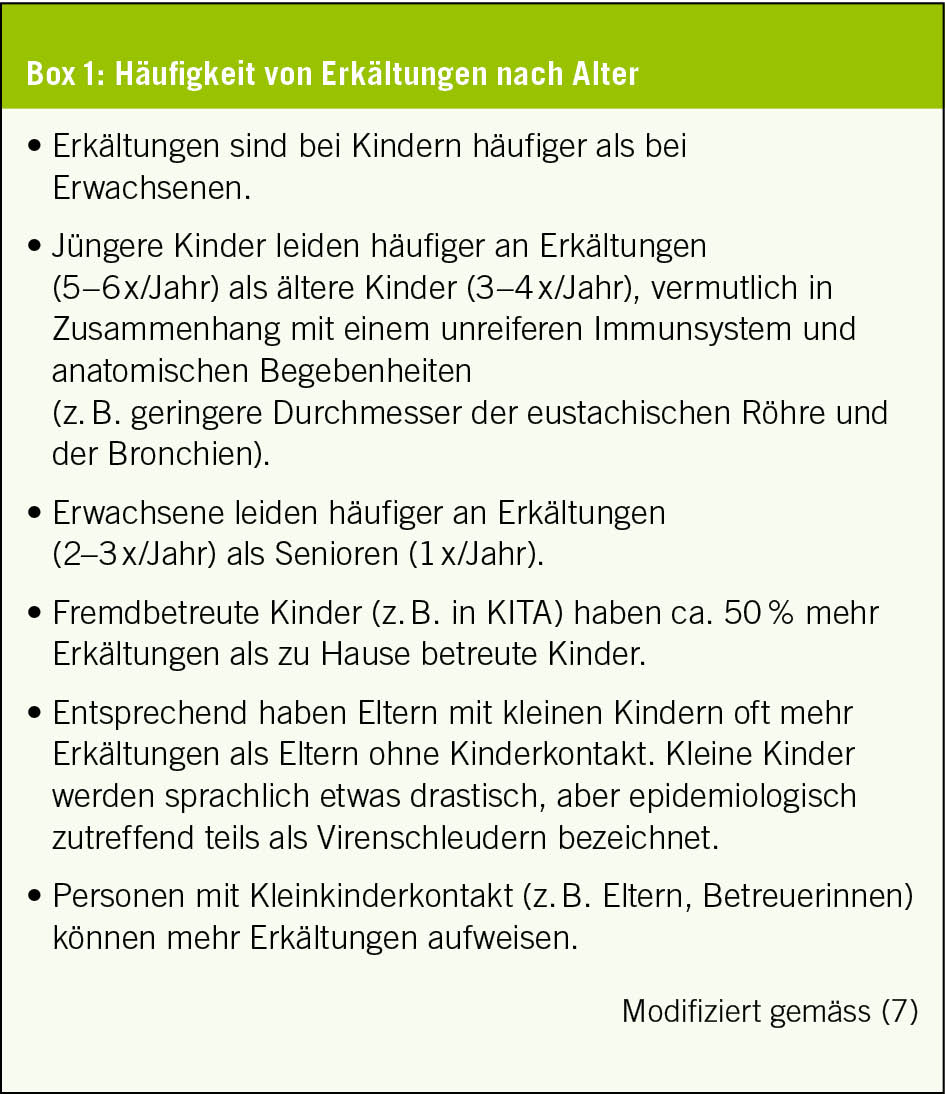
Atemwegsinfektionen sind grundsätzlich häufiger als angenommen, auch bei sonst gesunden Personen (Box 1) (7). So erleiden 10–15 % der gesunden Kinder mehr als zwölf Erkältungen pro Jahr. Selten liegt ein Immundefekt vor, allenfalls bestehen HNO-Auffälligkeiten oder Allergien (24).
Wie lange ist die Symptomdauer?
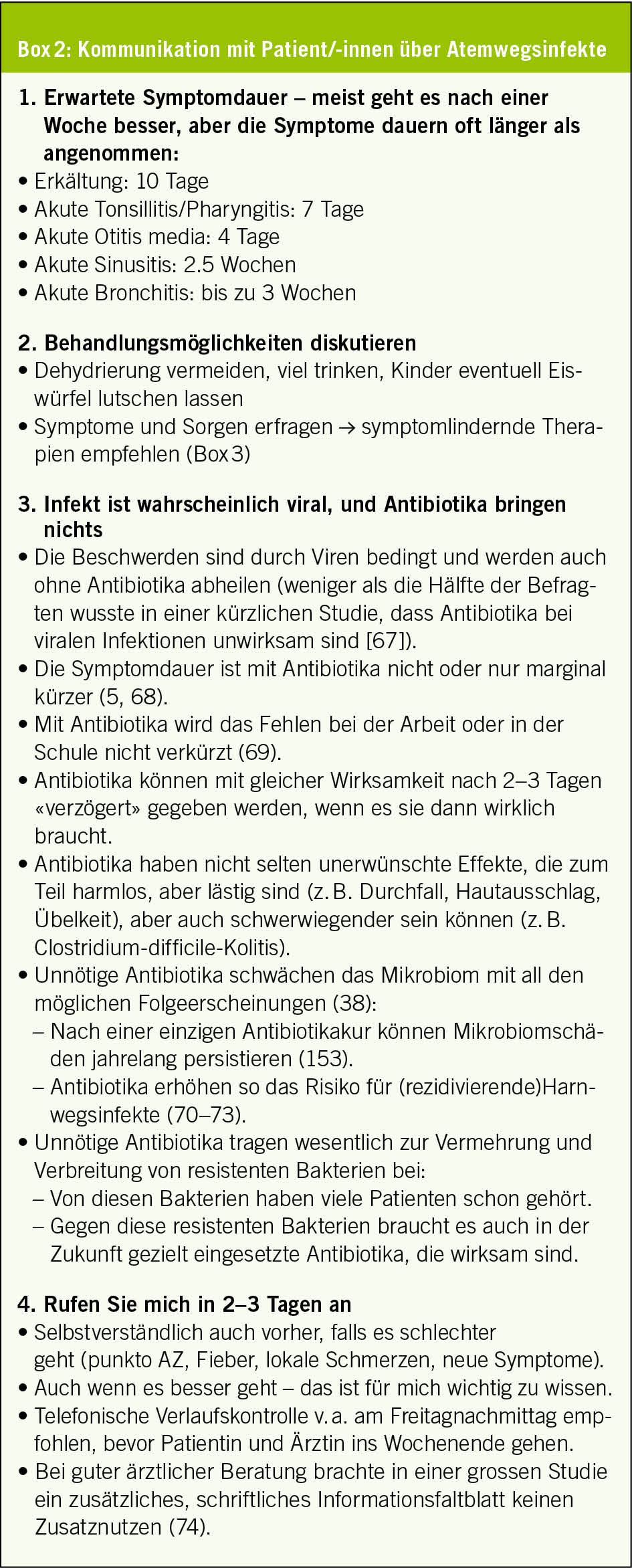
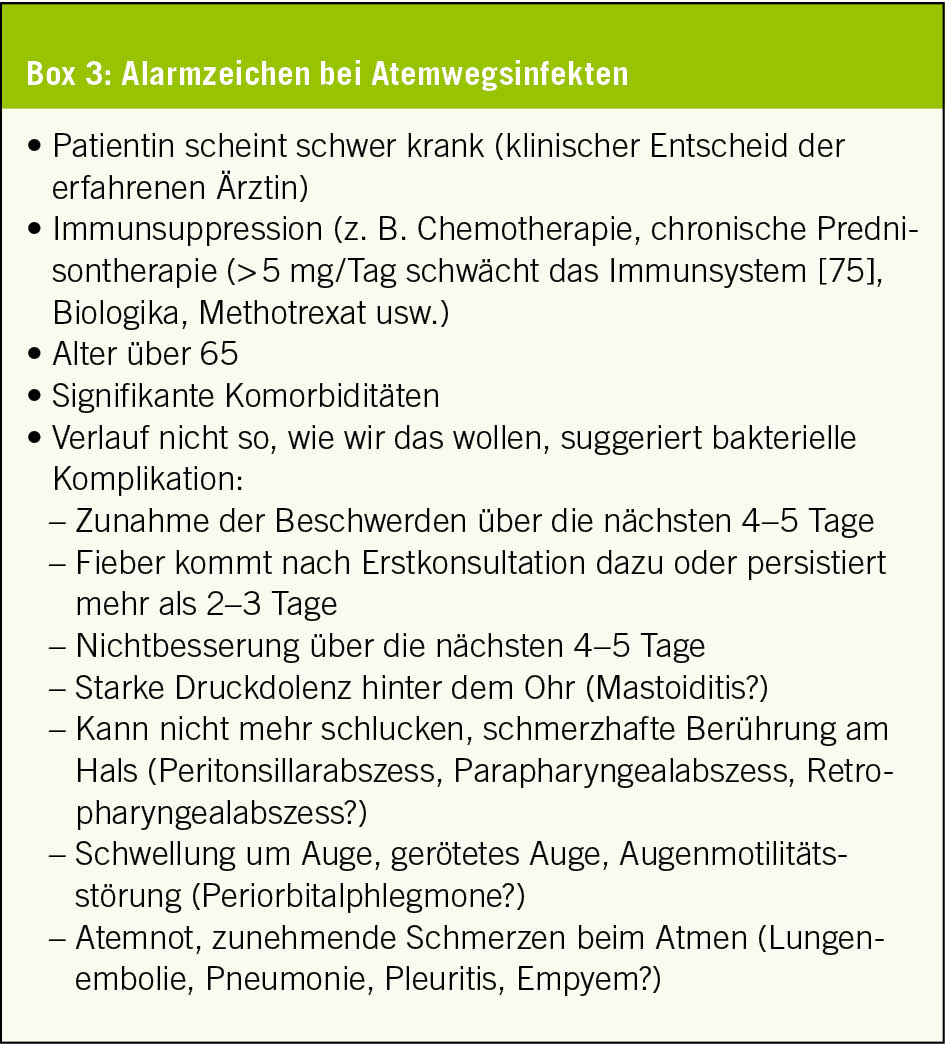
Eine realistische Einschätzung ist essenziell (Box 2). Atemwegsinfektionen dauern oft länger als angenommen: nicht nur 5–7 Tage, sondern 10–14 Tage. Husten ist oft das hartnäckigste Symptom: In einem Viertel der Fälle dauert Husten sogar drei Wochen oder länger. Es braucht gute Beratung, Geduld und Symptomlinderung. Insbesondere bei älteren und multimorbiden Patientinnen kann die Symptomdauer länger als erwartet sein. Und mit zunehmender Symptomdauer oder -schwere gehen die Patienten eher zum Arzt und erwarten eher ein Antibiotikum (25). Dies sind kommunikativ nicht immer einfache Situationen: Nur weil die Symptome > 1 Woche andauern oder mühsam sind (sie beeinträchtigen den Allgemeinzustand oder den Schlaf), braucht es kein Antibiotikum. Sondern: Antibiotika erst bei Alarmsignalen (Box 3).
Wie unterscheide ich bakterielle und virale Ursache?
Atemwegsinfektionen sind in > 95 % der Fälle viral: Nur bei 5 % lag in einer grossen Studie (2800 Patienten) in holländischen Hausarztpraxen bei Fieber und akutem Husten eine Pneumonie vor. Fieber ist kein klares Unterscheidungskriterium, weil auch banale virale Atemwegsinfektionen bei 25 % der Erwachsenen (und noch häufiger bei Kindern) Fieber machen (7, 8). Vorsicht bei Alarmsignalen (Box 3), v. a. bei fragilen, alten und immungeschwächten Patientinnen: Wenn die Beschwerden nach Erstkonsultation zunehmen, der Allgemeinzustand schlechter wird, Fieber dazukommt oder mehr als 2–3 Tage persistiert, dann könnte eine bakterielle Infektion vorliegen: Reevaluation erwägen plus eventuell Blutanalyse, Bildgebung und Antibiotikatherapie.
Ist die Lokalisation der Symptome entscheidend?
Nein. Die meisten Atemwegsinfekte sind viral, egal ob der Schnupfen im Vordergrund steht («Rhinitis»), das Halsweh («Tonsillitis», «Pharyngitis»), die Gesichts- oder Kopfschmerzen («Sinusitis»), das Ohrenweh («Otitis») oder der Husten («Bronchitis»). Die Lokalisation hat therapeutische Konsequenzen bezüglich der Wahl der symptomlindernden Therapie, bezüglich Antibiotikaentscheid jedoch nicht: Die Erkrankung wird mit oder ohne Antibiotika meist folgenlos abheilen, die Symptomdauer ist mit Antibiotika nur wenig oder gar nicht kürzer – wichtig ist eine gute Symptomlinderung.
Diagnostik
Kann ich das verursachende Virus anhand der Symptome diagnostizieren?
Nein, die Erreger verursachen ähnliche Symptome, und alle Erreger können mildere und schwerere Verläufe bewirken, also «Erkältung» und «Grippe». Konkret: Das Influenzavirus verursacht 5–15 % der «Erkältungen». Und Erkältungsviren (RSV, Rhinovirus, endemische Coronaviren, Sars-CoV-2 usw.) verursachen den Grossteil der «grippeartigen» Erkrankungen (7, 8).
Soll ich eine mikrobiologische Diagnostik machen?
Bei immunsupprimierten Patienten und Alarmzeichen: ja, Diagnostik erwägen. Ambulant, wenig komorbide Patienten und unkomplizierter Verlauf: nein. Ambulant empfehlen die Guidelines nicht einmal bei Pneumonie eine mikrobiologische Diagnostik (26, 27). Dies wegen oft fehlender therapeutischer Konsequenzen und den Kosten: Die virale Vierer-PCR (Influenza A, Influenza B, RSV, Sars-CoV-2) kostet > 200 Taxpunkte (TP), und die multiplex PCR (ca. 15 Viren und Bakterien) kostet > 300 TP.
Soll ich CRP und Leukozyten messen?
Das CRP kann ambulant helfen, bei Husten und Fieber die Diagnose Pneumonie zu erhärten bzw. unwahrscheinlicher zu machen (für die Leukozyten und das Procalcitonin sind die Daten weniger überzeugend) (28–35). Daher wird die CRP-Messung gemäss Guidelines und Metaanalysen empfohlen – vor allem wegen des Potenzials, unnötige Antibiotika zu vermeiden. Denn ein CRP < 20 mg/l hat einen beruhigenden Effekt: Es ist unwahrscheinlich, dass eine schwere bakterielle Infektion vorliegt und Antibiotika etwas bringen. Noch wichtiger als Entzündungsparameter ist allerdings der Symptomverlauf: bei Symptomverschlechterung im Verlauf oder prolongierten Symptomen an bakterielle Komplikationen denken und Bildgebung und Antibiotika erwägen, selbst bei normalem CRP und normalen Leukozyten. CRP (und Leukozyten) sind zwar bei bakteriellen Infektionen tendenziell höher als bei viralen, aber die Überlappung ist gross: Auch die viel häufigeren viralen Infekte können zu erhöhtem CRP und zu Leukozytose führen. Der beste Antibiotikaentscheid beruht also – wie so häufig – auf dem klinischen Gesamteindruck und nicht nur auf dem CRP.
Behandlung, Kommunikation
Sind symptomlindernde Therapien wirksam?
Gemäss einer Cochrane-Analyse gibt es keine gute Evidenz punkto Symptomdauer und Vermeidung von Komplikationen (36). Eine moderne, patientenzentrierte Medizin berücksichtigt jedoch neben der Studienlage auch die Erfahrung der Fachpersonen und die Wünsche der Patienten, die z. B. mit Phytotherapie, Homöopathie, anthroposophisch erweiterter Medizin oder traditioneller chinesischer Medizin gute Erfahrungen machen. Aktiv etwas für die eigene Gesundheit beizutragen, stärkt die Resilienz. Die in den Boxen 4, 5 und 6 zusammengefassten Präparate lindern Symptome und verbessern so das Wohlbefinden. Daher sind sie bei den Patienten beliebt. Dies hat sicher auch mit der zunehmenden Sensibilisierung von Ärztinnen und Patienten zu tun: Eine einzige Antibiotikabehandlung kann bereits die bakterielle Normalflora schädigen und Resistenzen begünstigen (37–39). Herstellerfirmen heben entsprechend die natürliche Herkunft ihrer Präparate hervor.
Ist Fieber gefährlich?
Fieber ist eine wichtige, gesunde, kontrollierte Reaktion des Körpers (kann z. B. Bakterienwachstum hemmen). Es gibt kaum Daten, dass Fieber an sich schädlich ist. Komplikationen sind nicht die Folgen des Fiebers, sondern Folgen der zugrunde liegenden Infektionskrankheit. Fieber von 1–2 Tagen Dauer mag keine diagnostische Konsequenz haben; wenn es aber im Verlauf der Erkrankung neu dazukommt oder mehr als 2–3 Tage persistiert, dann ist das ein Alarmzeichen (2, 40).
Wann soll ich Fieber senken?
Prinzipiell nicht, da die körpereigene Immunabwehr bei Fieber aktiver ist. Unnötige Antipyretika können die Immunreaktion nachweislich unterdrücken (41–43). Fiebersenkung dann, wenn das Fieber störende Symptome verursacht (z. B. Patientin kann wegen Gliederschmerzen nicht schlafen), also zur Steigerung des Wohlbefindens (40). Fieber fördert auch Dehydratation und deren ungünstige Folgen (Schwindel, Synkope, Unwohlsein, Niereninsuffizienz etc.), daher: Patientinnen auf eine ausreichende Trinkmenge aufmerksam machen.
Gibt es wirksame komplementärmedizinische Ansätze?
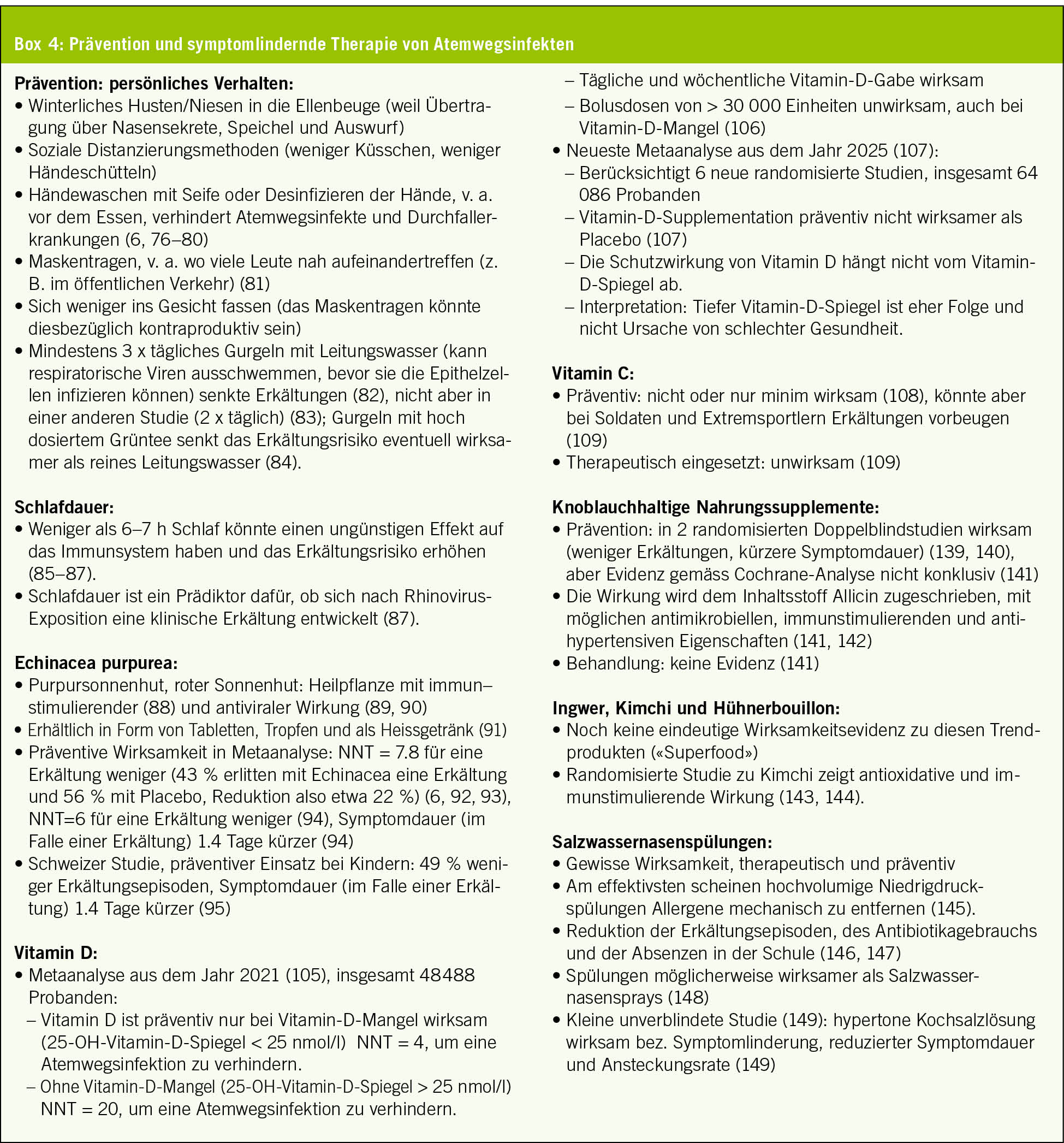
Ja – komplementärmedizinische Ärzte verschreiben weniger Antibiotika, bei guter Patientenzufriedenheit und ohne damit die Patientensicherheit zu gefährden (41, 42). Komplementärmedizin legt den Fokus zusätzlich auf Gesundheitsförderung und Prävention. Ein komplementärmedizinisch gestärktes Immunsystem ist möglicherweise weniger anfällig für Infektionen (44). Auch hier wichtig: gezielte Kommunikation, die das Vertrauen in das eigene Immunsystem fördert und die selbstlimitierende Natur des Atemwegsinfekts, komplementäre Behandlungsmethoden sowie präventive Massnahmen betont (Box 4) (45).
Kann ich Atemwegsinfekten vorbeugen?
Ja, durch ein paar gut bekannte Verhaltensmassnahmen (Box 4). Die Evidenz für die Wirksamkeit medikamentöser Prävention ist beschränkt (Box 5).
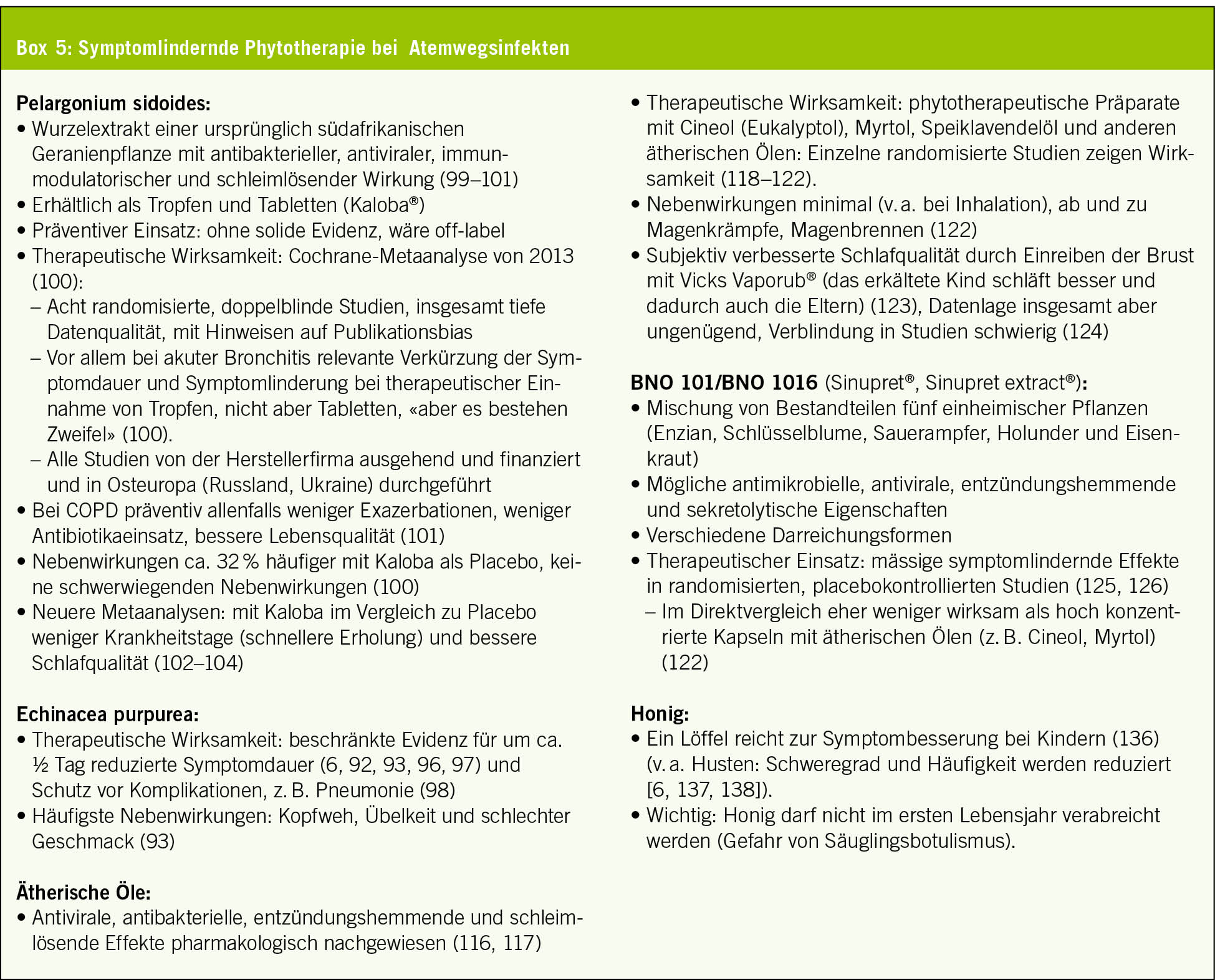
Immer wieder Atemwegsinfekte, das ist lästig – werde ich wenigstens immun?
Die folgende Beratung kann bei interessierten Patienten hilfreich sein: Bei gewissen Viren gibt es nur wenige verschiedene Typen, z. B. hat RSV nur 2 Serotypen A und B. Weil RSV aber die Ausbildung einer schützenden Immunität hemmt, kann es lebenslang zu RSV-Reinfektionen kommen, auch wenn der Schweregrad mit zunehmendem Alter meist abnimmt (46). Bei den häufigsten Erkältungsviren, den Rhinoviren, hingegen werden wir immun. Aber es kommt trotzdem immer wieder zu Rhinovirusinfekten, weil es mehr als 150 Rhinovirusserotypen gibt: Leider werden wir nur auf den Serotyp immun, den wir gerade hatten (47).
Antibiotikafreie Therapie von Atemwegsinfektionen
Unnötige Antibiotikaverschreibungen betreffen vor allem Atemwegs- und Harnwegsinfektionen (48) und sind die wichtigste Ursache von Antibiotikaresistenzen. Die Schweizerischen Gesellschaften für Infektiologie (SGINF) und Allgemeine Innere Medizin (SGAIM) und ihre Smarter Medicine Initiative empfehlen seit vielen Jahren, die Verschreibung von Antibiotika gegen unkomplizierte Infekte der oberen und unteren Atemwege zu vermeiden (1).
Wann sind Antibiotika bei Atemwegsinfektionen indiziert?
Wenn Alarmzeichen oder konkrete Hinweise auf eine bakterielle Infektion vorliegen (Box 3).
Wenn schon Antibiotika: sofort oder «verzögert»?
Ein bedauerlicher und wichtiger negativer Effekt von unnötigen Antibiotikatherapien und Laboranalysen ist die unnötige Medizinalisierung einer meist harmlosen Situation. Eine interessante Alternative zu sofortigen Antibiotika ist die Strategie der verzögerten («delayed») Antibiotikatherapie. Die Wirksamkeit und Komplikationsrate waren in grossen Studien gleich wie sofortige Antibiotika (49, 50) (Box 7). Die verzögerte Antibiotikastrategie könnte für Antibiotika-freundlich eingestellte Kollegen einen sinnvollen Kompromiss zwischen sofortiger und gar keiner Antibiotikatherapie darstellen.
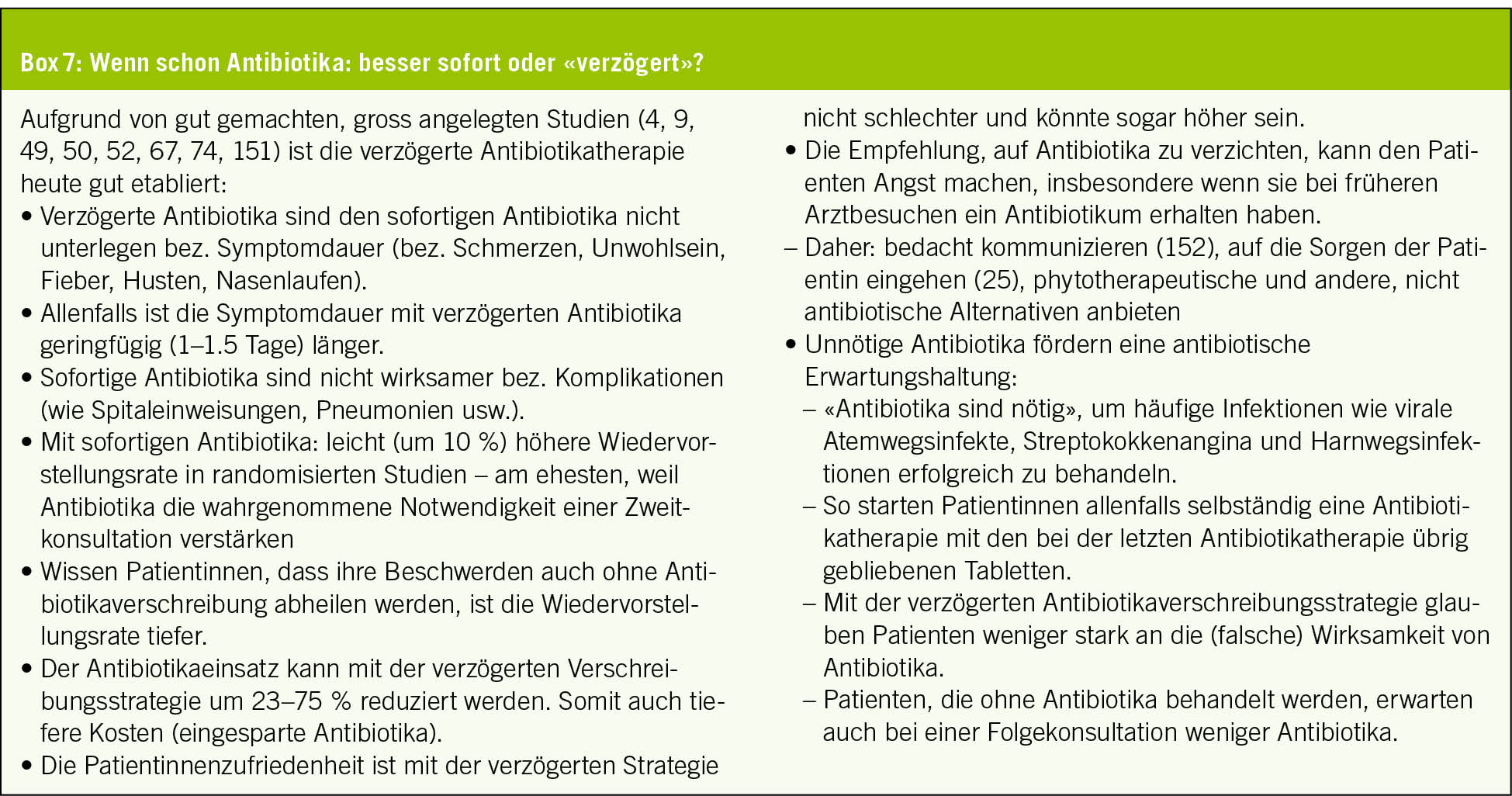
Sind «verzögerte Antibiotika» nicht schwierig zu kommunizieren?
Nein, weil wir klar kommunizieren, dass es JETZT keine Antibiotika braucht, dass sich die Patientin aber selbstverständlich gerne wieder melden soll, wenn der Zustand sich nicht innert einer nützlichen Frist verbessert oder gar verschlechtert (51). Um nicht die Verantwortung für den Antibiotikaentscheid auf die Patienten abzuschieben (das wäre unethisch – der Antibiotikaentscheid soll ein ärztlicher Entscheid bleiben), kann z. B. bei unsicheren Patienten und fehlender Besserung eine zweite Konsultation vereinbart werden, zumindest telefonisch (52, 53). Wir empfehlen nur ausnahmsweise, der Patientin ein Rezept mitzugeben, mit dem Hinweis, es erst einzulösen, falls die Symptome schlechter werden oder sich nach 72 h nicht bessern (ähnlich zu den aktuellen Empfehlungen zur Behandlung der akuten Otitis media [2]).
Gibt es weitere Vorteile einer antibiotikafreien Therapie?
Ja, die Schonung des Mikrobioms und der normalen lokalen Bakterienflora und damit die mögliche Förderung einer Immunität gegen Streptokokken, die vor Pharyngitis-Rezidiven schützen könnte (4, 54).
Wie vorgehen, damit die Patienten auch ohne Antibiotika zufrieden die Praxis verlassen?
Gemäss publizierten Daten hängt die Zufriedenheit nicht vom Verschreiben von Antibiotika ab, sondern vom Gefühl, dass die Patientin ernst genommen wurde, die Ärztin sich Zeit genommen hat und der Patient das weitere Vorgehen verstanden hat (55–66). Essenziell sind: gute Information bez. der Harmlosigkeit des Infekts, eine realistische Einschätzung der Symptomdauer (Box 2), gute ärztliche Erreichbarkeit in den kommenden Tagen. Konkret: Wann allfällige Nachkontrolle, und was soll die Patientin tun, falls es schlechter geht, z. B. am Wochenende (Box 2)?
Roswitha Dobler 1*, Damian Seifert 1*, Gisela Etter 2, Beatrix Falch 3, Caesar Gallmann 4, Charles Béguelin 5, 6, Philip Tarr 1, 7
1 Infektiologie und Spitalhygiene, Universitäres Zentrum Innere Medizin, Kantonsspital Baselland, Bruderholz, Universität Basel, Basel. Korrespondenz: philip.tarr@unibas.ch
2 Allgemeine Innere Medizin FMH, FA Homöopathie (SVHA), Richterswil ZH
3 ZHAW Life Sciences und Facility Management, Fachgruppe Naturstoffchemie und Phytopharmazie, Wädenswil
4 Allgemeine Innere Medizin FMH, Seepraxis, Au ZH
5 Service de Médecine Interne et des Maladies Infectieuses, Centre Hospitalier, Bienne
6 Universitätsklinik für Infektiologie, Inselspital, Universitätsspital Bern, Bern, Universität Bern
7 Departement Klinische Forschung, Universitätsspital Basel, Universität Basel, Basel
* equal contribution
Copyright
Aerzteverlag medinfo AG
Zweitabdruck aus der «PRAXIS» 10/2026
Infektiologie und Spitalhygiene
Universitäres Zentrum für Innere Medizin
Kantonsspital Baselland
4101 Bruderholz
philip.tarr@unibas.ch
Die Autorenschaft hat keine Interessenkonflikte im Zusammenhang mit diesem Artikel deklariert.
1. Schweizerische Gesellschaft für Allgemeine Innere Medizin (SGAIM). Top 5 Liste – Allgemeine Ambulante Innere Medizin [Internet]. [zitiert 25. November 2025]. Verfügbar unter: https://www.smartermedicine.ch/de/top-5-listen/ambulante-allgemeine-innere-medizin-2014
2. Schweizerische Gesellschaft für Infektiologie. Akute Atemwegsinfektion und/oder grippeähnliche Erkrankung beim Erwachsenen [Internet]. [zitiert 25. November 2025]. Verfügbar unter: https://ssi.guidelines.ch/guideline/5082
3. Del Mar C. Antibiotics for acute respiratory tract infections in primary care. BMJ. 5. Juli 2016;354:i3482. doi:10.1136/bmj.i3482 PubMed PMID: 27381415.
4. Little P, Williamson I, Warner G, Gould C, Gantley M, Kinmonth AL. Open randomised trial of prescribing strategies in managing sore throat. BMJ. 8. März 1997;314(7082):722–7. doi:10.1136/bmj.314.7082.722 PubMed PMID: 9116551; PubMed Central PMCID: PMC2126131.
5. Hofmann Y, Berger H, Wingeier B, Huber B, Boggian K, Hug-Batschelet H, u. a. Behandlung der Streptokokken-Angina. Swiss Med Forum – Schweiz Med-Forum. 17. Juli 2019. doi:10.4414/smf.2019.08092
6. DeGeorge KC, Ring DJ, Dalrymple SN. Treatment of the Common Cold. Am Fam Physician. 1. September 2019;100(5):281–9. PubMed PMID: 31478634.
7. Heikkinen T, Järvinen A. The common cold. The Lancet. 4. Januar 2003;361(9351):51–9. doi:10.1016/S0140-6736(03)12162-9 PubMed PMID: 12517470.
8. Eccles R. Understanding the symptoms of the common cold and influenza. Lancet Infect Dis. November 2005;5(11):718–25. doi:10.1016/S1473-3099(05)70270-X
9. Spurling GK, Dooley L, Clark J, Askew DA. Immediate versus delayed versus no antibiotics for respiratory infections. Cochrane Database Syst Rev [Internet]. 4. Oktober 2023 [zitiert 24. Oktober 2025]. Verfügbar unter: https://www.cochranelibrary.com/cdsr/doi/10.1002/14651858.CD004417.pub6/full
10. Bundesamt für Gesundheit BAG. Welche Hilfsmittel stehen den Ärztinnen und Ärzten bei der Verschreibung zur Verfügung? [Internet]. 2024 [zitiert 27. März 2026]. Verfügbar unter: https://www.bag.admin.ch/de/welche-hilfsmittel-stehen-den-arztinnen-und-arzten-bei-der-verschreibung-zur-verfuegung#Faktenblatt-Antibiotikaresistenzen-f %C3 %BCr-Patientinnen-und-Patienten
11. Bundesamt für Gesundheit BAG. Patientengerechte Informationsvermittlung bezüglich Antibiotika in Hausarztpraxen. BAG-Bulletin. Juli 2024;27/2024:8–13.
12. Bundesamt für Gesundheit BAG. Verschreibung von Antibiotika in der Schweiz – Infoblatt für Hausärztinnen und Hausärzte [Internet]. 2023 [zitiert 24. Oktober 2025]. Verfügbar unter: https://www.bag.admin.ch/dam/de/sd-web/sfLVS0U90CTo/infoblatt-antibiotikaverschreibung-hausarzt.pdf
13. Bundesamt für Gesundheit BAG. Patientenfaktenblatt «Antibiotika richtig einsetzen» [Internet]. 2024 [zitiert 24. Oktober 2025]. Verfügbar unter: https://www.bag.admin.ch/dam/de/sd-web/84kNEwxzerqD/patientenfaktenblatt.pdf
14. National Institute for Health and Care Excellence. Sinusitis (acute): antimicrobial prescribing [Internet]. NICE; 2017 [zitiert 26. März 2026]. Verfügbar unter: https://www.nice.org.uk/guidance/ng79
15. National Institute for Health and Care Excellence. Otitis media (acute): antimicrobial prescribing [Internet]. NICE; 2018 [zitiert 26. März 2026]. Verfügbar unter: https://www.nice.org.uk/guidance/ng91
16. National Institute for Health and Care Excellence. Sore throat (acute): antimicrobial prescribing [Internet]. NICE; 2018 [zitiert 26. März 2026]. Verfügbar unter: https://www.nice.org.uk/guidance/ng84
17. Berner Institut für Hausarztmedizin BIHAM. Entscheidungshilfen Übersicht [Internet]. 2025 [zitiert 27. März 2026]. Verfügbar unter: https://www.biham.unibe.ch/entscheidungshilfen/therapie/index_ger.html
18. Berner Institut für Hausarztmedizin BIHAM. Akuter ansteckender Husten – Informationsblatt für Ärzte [Internet]. 2025 [zitiert 27. März 2026]. Verfügbar unter: https://www.biham.unibe.ch/unibe/portal/fak_medizin/ber_vkhum/inst_biham/content/e1551903/e1661931/e1667480/e1670230/files1746147/InformationsblattfurArzte-Husten_ger.pdf
19. Berner Institut für Hausarztmedizin BIHAM. Akuter ansteckender Husten – Konsultationshilfsmittel [Internet]. 2024 [zitiert 27. März 2026]. Verfügbar unter: https://www.biham.unibe.ch/unibe/portal/fak_medizin/ber_vkhum/inst_biham/content/e1551903/e1661931/e1667480/e1670230/files1670236/KoHiM-AkuterinfektioeserHusten080724_21.6.24_ger.pdf
20. Berner Institut für Hausarztmedizin BIHAM. Akute Mandelentzündung – Informationsblatt für Ärzte [Internet]. 2023 [zitiert 27. März 2026]. Verfügbar unter: https://www.biham.unibe.ch/entscheidungshilfen/therapie/tonsilitis/index_ger.html
21. Berner Institut für Hausarztmedizin BIHAM. Akute Mandelentzündung – Konsultationshilfsmittel [Internet]. 2024 [zitiert 27. März 2026]. Verfügbar unter: https://www.biham.unibe.ch/unibe/portal/fak_medizin/ber_vkhum/inst_biham/content/e1551903/e1661931/e1669212/e1670291/files1670298/KonsultationshilfsmittelHalsschmerzen21.6.24_ger.pdf
22. Berner Institut für Hausarztmedizin BIHAM. Akute Nasennebenhöhlenentzündung – Informationsblatt für Ärzte [Internet]. 2024 [zitiert 27. März 2026]. Verfügbar unter: https://www.biham.unibe.ch/unibe/portal/fak_medizin/ber_vkhum/inst_biham/content/e1551903/e1661931/e1669224/e1670302/files1670305/InformationsblattfuerAerzte-Sinusitis_ger.pdf
23. Berner Institut für Hausarztmedizin BIHAM. Akute Nasennebenhöhlenentzündung – Konsultationshilfsmittel [Internet]. 2024 [zitiert 27. März 2026]. Verfügbar unter: https://www.biham.unibe.ch/unibe/portal/fak_medizin/ber_vkhum/inst_biham/content/e1551903/e1661931/e1669224/e1670302/files1670310/KoHiM-AkuteRhinosinusitis21.6.24_ger.pdf
24. Rovers MM, Balemans WAF, Sanders EAM, van der Ent CK, Zielhuis GA, Schilder AGM. Persistence of upper respiratory tract infections in a cohort followed from childhood to adulthood. Fam Pract. Juni 2006;23(3):286–90. doi:10.1093/fampra/cml001 PubMed PMID: 16517546.
25. McNulty CA, Nichols T, French DP, Joshi P, Butler CC. Expectations for consultations and antibiotics for respiratory tract infection in primary care: the RTI clinical iceberg. Br J Gen Pract. Juli 2013;63(612):e429–36. doi:10.3399/bjgp13X669149 PubMed PMID: 23834879; PubMed Central PMCID: PMC3693799.
26. Ewig S, Kolditz M, Pletz M, Altiner A, Albrich W, Drömann D, u. a. Behandlung von erwachsenen Patienten mit ambulant erworbener Pneumonie – Update 2021: S3-Leitlinie der Deutschen Gesellschaft für Pneumologie und Beatmungsmedizin (DGP), der Paul-Ehrlich-Gesellschaft für Chemotherapie (PEG), der Deutschen Gesellschaft für Infektiologie (DGI), der Deutschen Gesellschaft für Internistische Intensivmedizin und Notfallmedizin (DGIIN), der Gesellschaft für Virologie (GfV), des Kompetenznetzwerks CAPNETZ, der Deutschen Gesellschaft für Allgemeinmedizin (DEGAM), der Deutschen Gesellschaft für Geriatrie (DGG), der Deutschen Gesellschaft für Palliativmedizin (DGP), der Österreichischen Gesellschaft für Pneumologie (ÖGP), der Österreichischen Gesellschaft für Infektionskrankheiten und Tropenmedizin (ÖGIT), der Schweizerischen Gesellschaft für Pneumologie (SGP) und der Schweizerischen Gesellschaft für Infektiologie (SGInf). Pneumologie. September 2021;75(09):665–729. doi:10.1055/a-1497-0693
27. Schweizerische Gesellschaft für Infektiologie. Pneumonie / Ambulant-erworbene Pneumonie CAP [Internet]. [zitiert 24. Oktober 2025]. Verfügbar unter: https://ssi.guidelines.ch/guideline/3007/de
28. van Vugt SF, Broekhuizen BDL, Lammens C, Zuithoff NPA, de Jong PA, Coenen S, u. a. Use of serum C reactive protein and procalcitonin concentrations in addition to symptoms and signs to predict pneumonia in patients presenting to primary care with acute cough: diagnostic study. BMJ. 30. April 2013;346:f2450. doi:10.1136/bmj.f2450 PubMed PMID: 23633005; PubMed Central PMCID: PMC3639712.
29. Teepe J, Broekhuizen BDL, Loens K, Lammens C, Ieven M, Goossens H, u. a. Predicting the presence of bacterial pathogens in the airways of primary care patients with acute cough. Can Med Assoc J. 16. Januar 2017;189(2):E50–5. doi:10.1503/cmaj.151364 PubMed PMID: 27777252; PubMed Central PMCID: PMC5235925.
30. Hill AT, Gold PM, El Solh AA, Metlay JP, Ireland B, Irwin RS, u. a. Adult Outpatients With Acute Cough Due to Suspected Pneumonia or Influenza: CHEST Guideline and Expert Panel Report. Chest. Januar 2019;155(1):155–67. doi:10.1016/j.chest.2018.09.016 PubMed PMID: 30296418; PubMed Central PMCID: PMC6859244.
31. Smedemark SA, Aabenhus R, Llor C, Fournaise A, Olsen O, Jørgensen KJ. Biomarkers as point-of-care tests to guide prescription of antibiotics in people with acute respiratory infections in primary care. Cochrane Database Syst Rev. 17. Oktober 2022;10(10):CD010130. doi:10.1002/14651858.CD010130.pub3 PubMed PMID: 36250577; PubMed Central PMCID: PMC9575154.
32. Do NTT, Vu TVD, Greer RC, Dittrich S, Vandendorpe M, Pham NT, u. a. Implementation of point-of-care testing of C-reactive protein concentrations to improve antibiotic targeting in respiratory illness in Vietnamese primary care: a pragmatic cluster-randomised controlled trial. Lancet Infect Dis. September 2023;23(9):1085–94. doi:10.1016/S1473-3099(23)00125-1
33. Scandrett K, Colquitt J, Court R, Whiter F, Shinkins B, Takwoingi Y, u. a. Rapid tests to inform triage and antibiotic prescribing decisions for adults presenting with suspected acute respiratory infection: a rapid evidence synthesis of clinical effectiveness and cost-utility studies. Health Technol Assess. Mai 2025;29(13):1–114. doi:10.3310/KHGP7129 PubMed PMID: 40380815; PubMed Central PMCID: PMC12104858.
34. O’Shea J, Hughes C, Molloy GJ, Cadogan C, Vellinga A, Fahey T, u. a. Point-of-caRE DiagnostICs for respiraTOry tRact infectionS (PREDICTORS) study: developing guidance for using C-reactive protein point-of-care tests in the management of lower respiratory tract infections in primary care using a Delphi consensus technique. BMJ Open. 27. Mai 2025;15(5):e101438. doi:10.1136/bmjopen-2025-101438 PubMed PMID: 40436444; PubMed Central PMCID: PMC12121597.
35. Butler CC, Gillespie D, White P, Bates J, Lowe R, Thomas-Jones E, u. a. C-Reactive Protein Testing to Guide Antibiotic Prescribing for COPD Exacerbations. N Engl J Med. 11. Juli 2019;381(2):111–20. doi:10.1056/NEJMoa1803185 PubMed PMID: 31291514.
36. Smith SM, Schroeder K, Fahey T. Over-the-counter (OTC) medications for acute cough in children and adults in ambulatory settings. Cochrane Database Syst Rev. 15. August 2012;(8):CD001831. doi:10.1002/14651858.CD001831.pub4 PubMed PMID: 22895922.
37. Oldenburg CE, Hinterwirth A, Sié A, Coulibaly B, Ouermi L, Dah C, u. a. Gut Resistome After Oral Antibiotics in Preschool Children in Burkina Faso: A Randomized, Controlled Trial. Clin Infect Dis. 16. Januar 2020;70(3):525–7. doi:10.1093/cid/ciz455 PubMed PMID: 31149703; PubMed Central PMCID: PMC7456340.
38. Fishbein SRS, Mahmud B, Dantas G. Antibiotic perturbations to the gut microbiome. Nat Rev Microbiol. Dezember 2023;21(12):772–88. doi:10.1038/s41579-023-00933-y PubMed PMID: 37491458; PubMed Central PMCID: PMC12087466.
39. Elvers KT, Wilson VJ, Hammond A, Duncan L, Huntley AL, Hay AD, u. a. Antibiotic-induced changes in the human gut microbiota for the most commonly prescribed antibiotics in primary care in the UK: a systematic review. BMJ Open. 21. September 2020;10(9):e035677. doi:10.1136/bmjopen-2019-035677 PubMed PMID: 32958481; PubMed Central PMCID: PMC7507860.
40. Simon NR, Hofmann Y, Boggian K, Glinz D, Gallmann C, Etter G, u. a. Fieber bei Erwachsenen. Praxis. November 2024;113(10):267–73. doi:10.23785/PRAXIS.2024.10.006 PubMed PMID: 39665124.
41. Graham NM, Burrell CJ, Douglas RM, Debelle P, Davies L. Adverse effects of aspirin, acetaminophen, and ibuprofen on immune function, viral shedding, and clinical status in rhinovirus-infected volunteers. J Infect Dis. Dezember 1990;162(6):1277–82. doi:10.1093/infdis/162.6.1277 PubMed PMID: 2172402.
42. Brandts CH, Ndjavé M, Graninger W, Kremsner PG. Effect of paracetamol on parasite clearance time in Plasmodium falciparum malaria. The Lancet. 6. September 1997;350(9079):704–9. doi:10.1016/S0140-6736(97)02255-1 PubMed PMID: 9291905.
43. Prymula R, Siegrist CA, Chlibek R, Zemlickova H, Vackova M, Smetana J, u. a. Effect of prophylactic paracetamol administration at time of vaccination on febrile reactions and antibody responses in children: two open-label, randomised controlled trials. The Lancet. 17. Oktober 2009;374(9698):1339–50. doi:10.1016/S0140-6736(09)61208-3 PubMed PMID: 19837254.
44. Baars EW, Zoen EB van, Breitkreuz T, Martin D, Matthes H, Schoen-Angerer TV, u. a. The Contribution of Complementary and Alternative Medicine to Reduce Antibiotic Use: A Narrative Review of Health Concepts, Prevention, and Treatment Strategies. Evid Based Complement Alternat Med. 3. Februar 2019;2019:1–29. doi:10.1155/2019/5365608
45. Von Schoen-Angerer T, Tierny EM, Wildhaber J, Tarr P, Huber BM. Stratégies de réduction de l’usage d’antibiotiques à l’aide de la médecine complémentaire et intégrative. Rev Médicale Suisse. 2020;16(716):2301–5. doi:10.53738/REVMED.2020.16.716.2301
46. Saso A, Kampmann B. Vaccination against respiratory syncytial virus in pregnancy: a suitable tool to combat global infant morbidity and mortality? Lancet Infect Dis. August 2016;16(8):e153-163. doi:10.1016/S1473-3099(16)00119-5 PubMed PMID: 27317449.
47. Kamau E, Onyango CO, Otieno GP, Kiyuka PK, Agoti CN, Medley GF, u. a. An Intensive, Active Surveillance Reveals Continuous Invasion and High Diversity of Rhinovirus in Households. J Infect Dis. 15. März 2019;219(7):1049–57. doi:10.1093/infdis/jiy621 PubMed PMID: 30576538; PubMed Central PMCID: PMC6420174.
48. Jankauskaite L, Oostenbrink R. Childhood lower respiratory tract infections: more evidence to do less. The Lancet. 16. Oktober 2021;398(10309):1383–4. doi:10.1016/S0140-6736(21)01955-3 PubMed PMID: 34562390.
49. Adamu I, Lambert A, Bello S, Abdulmalik FA, Marshall T. Effects of antibiotic prescribing for respiratory tract infection on future consultations in primary care: a systematic review and meta-analysis. BMJ Open. Juli 2025;15(7):e099357. doi:10.1136/bmjopen-2025-099357
50. Little P, Stuart B, Hobbs FDR, Butler CC, Hay AD, Delaney B, u. a. Antibiotic prescription strategies for acute sore throat: a prospective observational cohort study. Lancet Infect Dis. 1. März 2014;14(3):213–9. doi:10.1016/S1473-3099(13)70294-9 PubMed PMID: 24440616.
51. Little P. Delayed prescribing of antibiotics for upper respiratory tract infection. BMJ. 6. August 2005;331(7512):301–2. doi:10.1136/bmj.331.7512.301 PubMed PMID: 16081428; PubMed Central PMCID: PMC1183117.
52. Stuart B, Hounkpatin H, Becque T, Yao G, Zhu S, Alonso-Coello P, u. a. Delayed antibiotic prescribing for respiratory tract infections: individual patient data meta-analysis. BMJ. 28. April 2021;373:n808. doi:10.1136/bmj.n808 PubMed PMID: 33910882.
53. Huttner B. Antibiotic prescription for sore throat or the legacy of Mr X2. Lancet Infect Dis. März 2014;14(3):177–8. doi:10.1016/S1473-3099(13)70694-7 PubMed PMID: 24440615.
54. Pichichero ME, Disney FA, Talpey WB, Green JL, Francis AB, Roghmann KJ, u. a. Adverse and beneficial effects of immediate treatment of Group A beta-hemolytic streptococcal pharyngitis with penicillin. Pediatr Infect Dis J. Juli 1987;6(7):635–43. doi:10.1097/00006454-198707000-00004 PubMed PMID: 3302916.
55. De La Poza Abad M, Mas Dalmau G, Moreno Bakedano M, González González AI, Canellas Criado Y, Hernández Anadón S, u. a. Prescription Strategies in Acute Uncomplicated Respiratory Infections: A Randomized Clinical Trial. JAMA Intern Med. 1. Januar 2016;176(1):21. doi:10.1001/jamainternmed.2015.7088
56. Edgar T, Boyd SD, Palame MJ. Sustainability for behaviour change in the fight against antibiotic resistance: a social marketing framework. J Antimicrob Chemother. 19. November 2008;63(2):230–7. doi:10.1093/jac/dkn508
57. Ong S, Nakase J, Moran GJ, Karras DJ, Kuehnert MJ, Talan DA. Antibiotic Use for Emergency Department Patients With Upper Respiratory Infections: Prescribing Practices, Patient Expectations, and Patient Satisfaction. Ann Emerg Med. September 2007;50(3):213–20. doi:10.1016/j.annemergmed.2007.03.026
58. Steinman MA, Landefeld CS, Gonzales R. Predictors of Broad-Spectrum Antibiotic Prescribing for Acute Respiratory Tract Infections in Adult Primary Care. JAMA. 12. Februar 2003;289(6):719. doi:10.1001/jama.289.6.719
59. Shapiro E. Injudicious antibiotic use: An unforeseen consequence of the emphasis on patient satisfaction? Clin Ther. Januar 2002;24(1):197–204. doi:10.1016/S0149-2918(02)85015-9
60. Mangione-Smith R, McGlynn EA, Elliott MN, McDonald L, Franz CE, Kravitz RL. Parent Expectations for Antibiotics, Physician-Parent Communication, and Satisfaction. Arch Pediatr Adolesc Med. 1. Juli 2001;155(7):800. doi:10.1001/archpedi.155.7.800
61. Hong JS, Philbrick JT, Schorling JB. Treatment of upper respiratory infections: do patients really want antibiotics? Am J Med. November 1999;107(5):511–5. doi:10.1016/S0002-9343(99)00270-3
62. Mangione-Smith R, McGlynn EA, Elliott MN, Krogstad P, Brook RH. The Relationship Between Perceived Parental Expectations and Pediatrician Antimicrobial Prescribing Behavior. Pediatrics. 1. April 1999;103(4):711–8. doi:10.1542/peds.103.4.711
63. Hamm RM, Hicks RJ, Bemben DA. Antibiotics and respiratory infections: are patients more satisfied when expectations are met? J Fam Pract. Juli 1996;43(1):56–62. PubMed PMID: 8691181.
64. Sanchez-Menegay C, Hudes ES, Cummings SR. Patient expectations and satisfaction with medical care for upper respiratory infections. J Gen Intern Med. Juli 1992;7(4):432–4. doi:10.1007/BF02599162
65. Brody DS, Miller SM, Lerman CE, Smith DG, Lazaro CG, Blum MJ. The Relationship Between Patients Satisfaction With Their Physicians and Perceptions About Interventions They Desired and Received: Med Care. November 1989;27(11):1027–35. doi:10.1097/00005650-198911000-00004
66. European Commission, TNS Political & Social, Herausgeber. Antimicrobial resistance: report. Brussels: European Commission; 2016. 1 S.
67. Scottish Intercollegiate Guidelines Network. Management of sore throat and indications for tonsillectomy: a national clinical guideline. Edinburgh: Scottish Intercollegiate Guidelines Network; 2010.
68. Berger H, Hofmann Y, Tarr P. Behandlung der Streptokokkenangina ohne Antibiotika. Prim Hosp Care – Allg Inn Med. 2021;21(11):360–7.
69. Gonzales R. A 65-Year-Old Woman With Acute Cough Illness and an Important Engagement. JAMA. 28. Mai 2003;289(20):2701–8. doi:10.1001/jama.289.20.2701
70. Herthelius BM, Hedström KG, Möllby R, Nord CE, Pettersson L, Winberg J. Pathogenesis of urinary tract infections–amoxicillin induces genital Escherichia coli colonization. Infection. 1988;16(5):263–6. doi:10.1007/BF01645066 PubMed PMID: 2905693.
71. Herthelius M, Möllby R, Nord CE, Winberg J. Amoxicillin promotes vaginal colonization with adhering Escherichia coli present in faeces. Pediatr Nephrol. Oktober 1989;3(4):443–7. doi:10.1007/BF00850224 PubMed PMID: 2701873.
72. Cai T, Mazzoli S, Mondaini N, Meacci F, Nesi G, D’Elia C, u. a. The role of asymptomatic bacteriuria in young women with recurrent urinary tract infections: to treat or not to treat? Clin Infect Dis. September 2012;55(6):771–7. doi:10.1093/cid/cis534 PubMed PMID: 22677710.
73. Finucane TE. «Urinary Tract Infection» and the Microbiome. Am J Med. März 2017;130(3):e97–8. doi:10.1016/j.amjmed.2016.08.018 PubMed PMID: 27593612.
74. Little P, Rumsby K, Kelly J, Watson L, Moore M, Warner G, u. a. Information Leaflet and Antibiotic Prescribing Strategies for Acute Lower Respiratory Tract InfectionA Randomized Controlled Trial. JAMA. 22. Juni 2005;293(24):3029–35. doi:10.1001/jama.293.24.3029
75. Wolfe F, Caplan L, Michaud K. Treatment for rheumatoid arthritis and the risk of hospitalization for pneumonia: Associations with prednisone, disease‐modifying antirheumatic drugs, and anti–tumor necrosis factor therapy. Arthritis Rheum. Februar 2006;54(2):628–34. doi:10.1002/art.21568
76. Jefferson T, Del Mar C, Dooley L, Ferroni E, Al-Ansary LA, Bawazeer GA, u. a. Physical interventions to interrupt or reduce the spread of respiratory viruses: systematic review. BMJ. 21. September 2009;339:b3675. doi:10.1136/bmj.b3675 PubMed PMID: 19773323; PubMed Central PMCID: PMC2749164.
77. Ross I, Bick S, Ayieko P, Dreibelbis R, Wolf J, Freeman MC, u. a. Effectiveness of handwashing with soap for preventing acute respiratory infections in low-income and middle-income countries: a systematic review and meta-analysis. The Lancet. Mai 2023;401(10389):1681–90. doi:10.1016/S0140-6736(23)00021-1
78. Turner RB, Fuls JL, Rodgers ND, Goldfarb HB, Lockhart LK, Aust LB. A randomized trial of the efficacy of hand disinfection for prevention of rhinovirus infection. Clin Infect Dis Off Publ Infect Dis Soc Am. Mai 2012;54(10):1422–6. doi:10.1093/cid/cis201 PubMed PMID: 22412063.
79. Hübner NO, Hübner C, Wodny M, Kampf G, Kramer A. Effectiveness of alcohol-based hand disinfectants in a public administration: impact on health and work performance related to acute respiratory symptoms and diarrhoea. BMC Infect Dis. 24. August 2010;10:250. doi:10.1186/1471-2334-10-250 PubMed PMID: 20735818; PubMed Central PMCID: PMC2939638.
80. Jefferson T, Del Mar CB, Dooley L, Ferroni E, Al-Ansary LA, Bawazeer GA, u. a. Physical interventions to interrupt or reduce the spread of respiratory viruses. Cochrane Database Syst Rev. 6. Juli 2011;2011(7):CD006207. doi:10.1002/14651858.CD006207.pub4 PubMed PMID: 21735402; PubMed Central PMCID: PMC6993921.
81. Jefferson T, Dooley L, Ferroni E, Al-Ansary LA, van Driel ML, Bawazeer GA, u. a. Physical interventions to interrupt or reduce the spread of respiratory viruses. Cochrane Database Syst Rev. 30. Januar 2023;1(1):CD006207. doi:10.1002/14651858.CD006207.pub6 PubMed PMID: 36715243; PubMed Central PMCID: PMC9885521.
82. Satomura K, Kitamura T, Kawamura T, Shimbo T, Watanabe M, Kamei M, u. a. Prevention of Upper Respiratory Tract Infections by Gargling: A Randomized Trial. Bd. 29. November 2005;29(4):302–7. doi:0.1016/j.amepre.2005.06.013
83. Goodall EC, Granados AC, Luinstra K, Pullenayegum E, Coleman BL, Loeb M, u. a. Vitamin D3 and gargling for the prevention of upper respiratory tract infections: a randomized controlled trial. BMC Infect Dis. Dezember 2014;14(1):273. doi:10.1186/1471-2334-14-273
84. Tominaga T, Ikukawa T, Furushima D, Nakamura TJ, Yamada H. An Exploratory Randomized Controlled Study to Investigate Concentration-Dependence of Green Tea Catechin Gargling on Acute Upper Respiratory Tract Infections. Biol Pharm Bull. 23. Juli 2024;47(7):1331–7. doi:10.1248/bpb.b24-00113
85. Wentz LM, Ward MD, Potter C, Oliver SJ, Jackson S, Izard RM, u. a. Increased Risk of Upper Respiratory Infection in Military Recruits Who Report Sleeping Less Than 6 h per night. Mil Med. 5. November 2018;183(11–12):e699–704. doi:10.1093/milmed/usy090
86. Cohen S, Doyle WJ, Alper CM, Janicki-Deverts D, Turner RB. Sleep habits and susceptibility to the common cold. Arch Intern Med. 12. Januar 2009;169(1):62–7. doi:10.1001/archinternmed.2008.505 PubMed PMID: 19139325; PubMed Central PMCID: PMC2629403.
87. Prather AA, Janicki-Deverts D, Hall MH, Cohen S. Behaviorally Assessed Sleep and Susceptibility to the Common Cold. Sleep. 1. September 2015;38(9):1353–9. doi:10.5665/sleep.4968
88. Shahrajabian MH, Sun W. Iranian Traditional Medicine (ITM) and Natural Remedies for Treatmentof the Common Cold and Flu. Rev Recent Clin Trials. Mai 2024;19(2):91–100. doi:10.2174/0115748871275500231127065053
89. Signer J, Jonsdottir HR, Albrich WC, Strasser M, Züst R, Ryter S, u. a. In vitro virucidal activity of Echinaforce®, an Echinacea purpurea preparation, against coronaviruses, including common cold coronavirus 229E and SARS-CoV-2. Virol J. Dezember 2020;17(1):136. doi:10.1186/s12985-020-01401-2
90. Zima K, Sochocka M, Ochnik M, Khaidakov B, Lemke K, Kowalczyk P. Therapeutic Potential of a Natural Blend of Aronia melancarpa, Lonicera caerulea, and Echinacea purpurea Extracts in Treating Upper Respiratory Tract Infections: Preliminary Clinical and In Vitro Immunomodulatory Insights. Int J Mol Sci. 15. Dezember 2024;25(24):13436. doi:10.3390/ijms252413436
91. Rauš K, Pleschka S, Klein P, Schoop R, Fisher P. Effect of an Echinacea-Based Hot Drink Versus Oseltamivir in Influenza Treatment: A Randomized, Double-Blind, Double-Dummy, Multicenter, Noninferiority Clinical Trial. Curr Ther Res Clin Exp. Dezember 2015;77:66–72. doi:10.1016/j.curtheres.2015.04.001 PubMed PMID: 26265958; PubMed Central PMCID: PMC4528044.
92. David S, Cunningham R. Echinacea for the prevention and treatment of upper respiratory tract infections: A systematic review and meta-analysis. Complement Ther Med. Juni 2019;44:18–26. doi:10.1016/j.ctim.2019.03.011
93. Karsch-Völk M, Barrett B, Linde K. Echinacea for Preventing and Treating the Common Cold. JAMA. 10. Februar 2015;313(6):618–9. doi:10.1001/jama.2014.17145
94. Shah SA, Sander S, White CM, Rinaldi M, Coleman CI. Evaluation of echinacea for the prevention and treatment of the common cold: a meta-analysis. Lancet Infect Dis. 1. Juli 2007;7(7):473–80. doi:10.1016/S1473-3099(07)70160-3 PubMed PMID: 17597571.
95. Ogal M, Johnston SL, Klein P, Schoop R. Echinacea reduces antibiotic usage in children through respiratory tract infection prevention: a randomized, blinded, controlled clinical trial. Eur J Med Res. Dezember 2021;26(1):33. doi:10.1186/s40001-021-00499-6
96. Yale SH, Liu K. Echinacea purpurea therapy for the treatment of the common cold: a randomized, double-blind, placebo-controlled clinical trial. Arch Intern Med. 14. Juni 2004;164(11):1237–41. doi:10.1001/archinte.164.11.1237 PubMed PMID: 15197051.
97. Barrett B, Brown R, Rakel D, Mundt M, Bone K, Barlow S, u. a. Echinacea for treating the common cold: a randomized trial. Ann Intern Med. 21. Dezember 2010;153(12):769–77. doi:10.7326/0003-4819-153-12-201012210-00003 PubMed PMID: 21173411; PubMed Central PMCID: PMC3056276.
98. Schapowal A, Klein P, Johnston SL. Echinacea reduces the risk of recurrent respiratory tract infections and complications: a meta-analysis of randomized controlled trials. Adv Ther. März 2015;32(3):187–200. doi:10.1007/s12325-015-0194-4 PubMed PMID: 25784510.
99. Roth M, Fang L, Stolz D, Tamm M. Pelargonium sidoides radix extract EPs 7630 reduces rhinovirus infection through modulation of viral binding proteins on human bronchial epithelial cells. PloS One. 2019;14(2):e0210702. doi:10.1371/journal.pone.0210702 PubMed PMID: 30707726; PubMed Central PMCID: PMC6358071.
100. Timmer A, Günther J, Motschall E, Rücker G, Antes G, Kern WV. Pelargonium sidoides extract for treating acute respiratory tract infections. Cochrane Database Syst Rev. 22. Oktober 2013;2013(10):CD006323. doi:10.1002/14651858.CD006323.pub3 PubMed PMID: 24146345; PubMed Central PMCID: PMC11835051.
101. Matthys H, Funk P. Pelargonium sidoides preparation EPs 7630 in COPD: health-related quality-of-life and other patient-reported outcomes in adults receiving add-on therapy. Curr Med Res Opin. Juli 2018;34(7):1245–51. doi:10.1080/03007995.2017.1416344 PubMed PMID: 29231073.
102. Kardos P, Lehmacher W, Zimmermann A, Brandes-Schramm J, Funk P, Matthys H, u. a. Effects of Pelargonium sidoides extract EPs 7630 on acute cough and quality of life – a meta-analysis of randomized, placebo-controlled trials. Multidiscip Respir Med. 12. Januar 2022;17:868. doi:10.4081/mrm.2022.868 PubMed PMID: 36051888; PubMed Central PMCID: PMC9425964.
103. Schapowal A, Dobos G, Cramer H, Ong KC, Adler M, Zimmermann A, u. a. Treatment of signs and symptoms of the common cold using EPs 7630 – results of a meta-analysis. Heliyon. November 2019;5(11):e02904. doi:10.1016/j.heliyon.2019.e02904 PubMed PMID: 31844762; PubMed Central PMCID: PMC6888731.
104. Hoang MP, Seresirikachorn K, Chitsuthipakorn W, Snidvongs K. Herbal Medicines for Rhinosinusitis: A Systematic Review and Network Meta-analysis. Curr Allergy Asthma Rep. Februar 2023;23(2):93–109. doi:10.1007/s11882-022-01060-z PubMed PMID: 36609950.
105. Jolliffe DA, Camargo CA, Sluyter JD, Aglipay M, Aloia JF, Ganmaa D, u. a. Vitamin D supplementation to prevent acute respiratory infections: a systematic review and meta-analysis of aggregate data from randomised controlled trials. Lancet Diabetes Endocrinol. Mai 2021;9(5):276–92. doi:10.1016/S2213-8587(21)00051-6 PubMed PMID: 33798465.
106. Martineau AR, Jolliffe DA, Hooper RL, Greenberg L, Aloia JF, Bergman P, u. a. Vitamin D supplementation to prevent acute respiratory tract infections: systematic review and meta-analysis of individual participant data. BMJ. 15. Februar 2017;356:i6583. doi:10.1136/bmj.i6583 PubMed PMID: 28202713; PubMed Central PMCID: PMC5310969.
107. Jolliffe DA, Camargo CA, Sluyter JD, Aglipay M, Aloia JF, Bergman P, u. a. Vitamin D supplementation to prevent acute respiratory infections: systematic review and meta-analysis of stratified aggregate data. Lancet Diabetes Endocrinol. 1. April 2025;13(4):307–20. doi:10.1016/S2213-8587(24)00348-6 PubMed PMID: 39993397.
108. Abioye AI, Bromage S, Fawzi W. Effect of micronutrient supplements on influenza and other respiratory tract infections among adults: a systematic review and meta-analysis. BMJ Glob Health. Januar 2021;6(1):e003176. doi:10.1136/bmjgh-2020-003176
109. Hemilä H, Chalker E. Vitamin C for preventing and treating the common cold. Cochrane Database Syst Rev. 31. Januar 2013;2013(1):CD000980. doi:10.1002/14651858.CD000980.pub4 PubMed PMID: 23440782; PubMed Central PMCID: PMC8078152.
110. Wang MX, Win SS, Pang J. Zinc Supplementation Reduces Common Cold Duration among Healthy Adults: A Systematic Review of Randomized Controlled Trials with Micronutrients Supplementation. Am J Trop Med Hyg. 8. Juli 2020;103(1):86–99. doi:10.4269/ajtmh.19-0718
111. Nault D, Machingo TA, Shipper AG, Antiporta DA, Hamel C, Nourouzpour S, u. a. Zinc for prevention and treatment of the common cold. Cochrane Acute Respiratory Infections Group, Herausgeber. Cochrane Database Syst Rev. 9. Mai 2024;2024(5). doi:10.1002/14651858.CD014914.pub2
112. Eby G. Zinc for colds? Yes, but don’t swallow whole! J Fam Pract. Januar 2012;61(1):9; author reply 9-10. PubMed PMID: 22389935.
113. Eby GA. Zinc lozenges as cure for the common cold–a review and hypothesis. Med Hypotheses. März 2010;74(3):482–92. doi:10.1016/j.mehy.2009.10.017 PubMed PMID: 19906491; PubMed Central PMCID: PMC7173295.
114. Schlatter C. Zink zur Behandlung und Prophylaxe von Erkältungen. Pharm Care Res Group Univ Basel. 15. Dezember 2013;i.m@il-Offizin22.
115. Science M, Johnstone J, Roth DE, Guyatt G, Loeb M. Zinc for the treatment of the common cold: a systematic review and meta-analysis of randomized controlled trials. Can Med Assoc J. 10. Juli 2012;184(10):E551-561. doi:10.1503/cmaj.111990 PubMed PMID: 22566526; PubMed Central PMCID: PMC3394849.
116. Wani AR, Yadav K, Khursheed A, Rather MA. An updated and comprehensive review of the antiviral potential of essential oils and their chemical constituents with special focus on their mechanism of action against various influenza and coronaviruses. Microb Pathog. März 2021;152:104620. doi:10.1016/j.micpath.2020.104620 PubMed PMID: 33212200; PubMed Central PMCID: PMC9159739.
117. Ahmad A, Elisha IL, van Vuuren S, Viljoen A. Volatile phenolics: A comprehensive review of the anti-infective properties of an important class of essential oil constituents. Phytochemistry. Oktober 2021;190:112864. doi:10.1016/j.phytochem.2021.112864 PubMed PMID: 34311279.
118. Gruenwald J, Graubaum HJ, Busch R. Efficacy and tolerability of a fixed combination of thyme and primrose root in patients with acute bronchitis. A double-blind, randomized, placebo-controlled clinical trial. Arzneimittelforschung. 2005;55(11):669–76. doi:10.1055/s-0031-1296916 PubMed PMID: 16366041.
119. Kemmerich B, Eberhardt R, Stammer H. Efficacy and tolerability of a fluid extract combination of thyme herb and ivy leaves and matched placebo in adults suffering from acute bronchitis with productive cough. A prospective, double-blind, placebo-controlled clinical trial. Arzneimittelforschung. 2006;56(9):652–60. doi:10.1055/s-0031-1296767 PubMed PMID: 17063641.
120. Gillissen A, Wittig T, Ehmen M, Krezdorn HG, de Mey C. A multi-centre, randomised, double-blind, placebo-controlled clinical trial on the efficacy and tolerability of GeloMyrtol® forte in acute bronchitis. Drug Res. Januar 2013;63(1):19–27. doi:10.1055/s-0032-1331182 PubMed PMID: 23447044.
121. Bruhn C. Die pflanzliche Lösung: Saponine und ätherische Öle bei Erkältungshusten und akuter Bronchitis. DAZ. 36. Aufl. 7. September 2017:40.
122. Matl CM, Jang W, Salley JR, Fort CL, Demke JC, Tran P, u. a. Effects of Essential Oils in the Treatment of Acute Rhinosinusitis: A Systematic Review. Laryngoscope Investig Otolaryngol. Juni 2025;10(3):e70189. doi:10.1002/lio2.70189
123. Paul IM, Beiler JS, King TS, Clapp ER, Vallati J, Berlin CM. Vapor rub, petrolatum, and no treatment for children with nocturnal cough and cold symptoms. Pediatrics. Dezember 2010;126(6):1092–9. doi:10.1542/peds.2010-1601 PubMed PMID: 21059712; PubMed Central PMCID: PMC3600823.
124. Valido A, Boncompagni AC, Tsang M, Hume P. There’s the Rub: a narrative review of the benefits and complications associated with Vicks VapoRub use. PeerJ. 27. Februar 2025;13:e19105. doi:10.7717/peerj.19105
125. Jund R, Mondigler M, Steindl H, Stammer H, Stierna P, Bachert C, u. a. Clinical efficacy of a dry extract of five herbal drugs in acute viral rhinosinusitis. Rhinology. Dezember 2012;50(4):417–26. doi:10.4193/Rhino.12.015 PubMed PMID: 23193534.
126. Jund R, Mondigler M, Stammer H, Stierna P, Bachert C. Herbal drug BNO 1016 is safe and effective in the treatment of acute viral rhinosinusitis. Acta Otolaryngol (Stockh). Januar 2015;135(1):42–50. doi:10.3109/00016489.2014.952047 PubMed PMID: 25496178; PubMed Central PMCID: PMC4487568.
127. Mahboubi M. Marsh Mallow (Althaea officinalis L.) and Its Potency in the Treatment of Cough. Complement Med Res. 2020;27(3):174–83. doi:10.1159/000503747 PubMed PMID: 31770755.
128. Bonaterra GA, Schmitt J, Schneider K, Schwarzbach H, Aziz-Kalbhenn H, Kelber O, u. a. Phytohustil® and root extract of Althaea officinalis L. exert anti-inflammatory and anti-oxidative properties and improve the migratory capacity of endothelial cells in vitro. Front Pharmacol. 2022;13:948248. doi:10.3389/fphar.2022.948248 PubMed PMID: 36569306; PubMed Central PMCID: PMC9773075.
129. Deckx L, De Sutter AI, Guo L, Mir NA, van Driel ML. Nasal decongestants in monotherapy for the common cold. Cochrane Database Syst Rev. 17. Oktober 2016;10(10):CD009612. doi:10.1002/14651858.CD009612.pub2 PubMed PMID: 27748955; PubMed Central PMCID: PMC6461189.
130. Payne SC, McKenna M, Buckley J, Colandrea M, Chow A, Detwiller K, u. a. Clinical Practice Guideline: Adult Sinusitis Update. Otolaryngol–Head Neck Surg Off J Am Acad Otolaryngol-Head Neck Surg. August 2025;173 Suppl 1:S1–56. doi:10.1002/ohn.1344 PubMed PMID: 40742114.
131. Dykewicz MS, Wallace DV, Amrol DJ, Baroody FM, Bernstein JA, Craig TJ, u. a. Rhinitis 2020: A practice parameter update. J Allergy Clin Immunol. Oktober 2020;146(4):721–67. doi:10.1016/j.jaci.2020.07.007 PubMed PMID: 32707227.
132. Hayward G, Thompson MJ, Perera R, Del Mar CB, Glasziou PP, Heneghan CJ. Corticosteroids for the common cold. Cochrane Database Syst Rev. 13. Oktober 2015;2015(10):CD008116. doi:10.1002/14651858.CD008116.pub3 PubMed PMID: 26461493; PubMed Central PMCID: PMC8734596.
133. Chalumeau M, Duijvestijn YCM. Acetylcysteine and carbocysteine for acute upper and lower respiratory tract infections in paediatric patients without chronic broncho-pulmonary disease. Cochrane Database Syst Rev. 31. Mai 2013;2013(5):CD003124. doi:10.1002/14651858.CD003124.pub4 PubMed PMID: 23728642; PubMed Central PMCID: PMC11285305.
134. Schaefer A, Kehr MS, Giannetti BM, Bulitta M, Staiger C. A randomized, controlled, double-blind, multi-center trial to evaluate the efficacy and safety of a liquid containing ivy leaves dry extract (EA 575®) vs. placebo in the treatment of adults with acute cough. Pharm. 1. September 2016;71(9):504–9. doi:10.1691/ph.2016.6712 PubMed PMID: 29441845.
135. Kardos P, de Zeeuw J, Trompetter I, Braun S, Ilieva Y. Efficacy and Safety of a Single Ivy Extract Versus Two Herbal Extract Combinations in Patients with Acute Bronchitis: A Multi-Center, Randomized, Open-Label Clinical Trial. Pharmaceuticals. 20. Mai 2025;18(5):754. doi:10.3390/ph18050754 PubMed PMID: 40430571; PubMed Central PMCID: PMC12114782.
136. Paul IM, Beiler J, McMonagle A, Shaffer ML, Duda L, Berlin CM. Effect of honey, dextromethorphan, and no treatment on nocturnal cough and sleep quality for coughing children and their parents. Arch Pediatr Adolesc Med. Dezember 2007;161(12):1140–6. doi:10.1001/archpedi.161.12.1140 PubMed PMID: 18056558.
137. Goldman RD. Honey for treatment of cough in children. Can Fam Physician Med Fam Can. Dezember 2014;60(12):1107–8, 1110. PubMed PMID: 25642485; PubMed Central PMCID: PMC4264806.
138. Oduwole O, Udoh EE, Oyo-Ita A, Meremikwu MM. Honey for acute cough in children. Cochrane Database Syst Rev. 10. April 2018;4(4):CD007094. doi:10.1002/14651858.CD007094.pub5 PubMed PMID: 29633783; PubMed Central PMCID: PMC6513626.
139. Josling P. Preventing the common cold with a garlic supplement: a double-blind, placebo-controlled survey. Adv Ther. 2001;18(4):189–93. doi:10.1007/BF02850113 PubMed PMID: 11697022.
140. Nantz MP, Rowe CA, Muller CE, Creasy RA, Stanilka JM, Percival SS. Supplementation with aged garlic extract improves both NK and γδ-T cell function and reduces the severity of cold and flu symptoms: a randomized, double-blind, placebo-controlled nutrition intervention. Clin Nutr. Juni 2012;31(3):337–44. doi:10.1016/j.clnu.2011.11.019 PubMed PMID: 22280901.
141. Lissiman E, Bhasale AL, Cohen M. Garlic for the common cold. Cochrane Acute Respiratory Infections Group, Herausgeber. Cochrane Database Syst Rev. 11. November 2014;2020(9). doi:10.1002/14651858.CD006206.pub4
142. Ried K. Garlic Lowers Blood Pressure in Hypertensive Individuals, Regulates Serum Cholesterol, and Stimulates Immunity: An Updated Meta-analysis and Review. J Nutr. Februar 2016;146(2):389S-396S. doi:10.3945/jn.114.202192 PubMed PMID: 26764326.
143. Lee W, Moon HR, Choi H, Lee HJ, Kim Y, Kim HJ, u. a. Single-cell RNA sequencing reveals that kimchi dietary intervention modulates human antigen-presenting and CD4+ T cells. NPJ Sci Food. 17. November 2025;9(1):236. doi:10.1038/s41538-025-00593-7 PubMed PMID: 41249184; PubMed Central PMCID: PMC12623727.
144. ClevelandClinic – Health Benefits of Kimchi [Internet]. [zitiert 11. März 2026]. Verfügbar unter: https://health.clevelandclinic.org/is-kimchi-good-for-you
145. Pecoraro L, Di Muri E, Lezzi G, Picciolo S, De Musso M, Piazza M, u. a. Nasal Irrigations: A 360-Degree View in Clinical Practice. Medicina (Mex). 1. August 2025;61(8):1402. doi:10.3390/medicina61081402
146. Šlapak I, Skoupá J, Strnad P, Horník P. Efficacy of Isotonic Nasal Wash (Seawater) in the Treatment and Prevention of Rhinitis in Children. Arch Otolaryngol Neck Surg. 1. Januar 2008;134(1):67. doi:10.1001/archoto.2007.19
147. King D, Mitchell B, Williams CP, Spurling GK. Saline nasal irrigation for acute upper respiratory tract infections. Cochrane Acute Respiratory Infections Group, Herausgeber. Cochrane Database Syst Rev. 20. April 2015;2015(4). doi:10.1002/14651858.CD006821.pub3
148. Pynnonen MA, Mukerji SS, Kim HM, Adams ME, Terrell JE. Nasal saline for chronic sinonasal symptoms: a randomized controlled trial. Arch Otolaryngol Head Neck Surg. November 2007;133(11):1115–20. doi:10.1001/archotol.133.11.1115 PubMed PMID: 18025315.
149. Ramalingam S, Graham C, Dove J, Morrice L, Sheikh A. A pilot, open labelled, randomised controlled trial of hypertonic saline nasal irrigation and gargling for the common cold. Sci Rep. 31. Januar 2019;9(1):1015. doi:10.1038/s41598-018-37703-3 PubMed PMID: 30705369; PubMed Central PMCID: PMC6355924.
150. Germann M, Hilfiker A, Huber BM, Rosamilia C, Grandinetti T, Wingeier B, u. a. Immunstimulation zur Prävention und Therapie von akuten Luftwegsinfektionen. Prim Hosp Care – Allg Inn Med. 6. November 2019. doi:10.4414/phc-d.2019.10139
151. Little P, Stuart B, Smith S, Thompson MJ, Knox K, Van Den Bruel A, u. a. Antibiotic prescription strategies and adverse outcome for uncomplicated lower respiratory tract infections: prospective cough complication cohort (3C) study. BMJ. 22. Mai 2017;j2148. doi:10.1136/bmj.j2148
152. Sax A. Weniger macht Angst. Schweizerische Ärztezeitung. 2016;03:120.
153. Baldanzi G, Larsson A, Sayols-Baixeras S, Dekkers KF, Hammar U, Nguyen D, u. a. Antibiotic use and gut microbiome composition links from individual-level prescription data of 14,979 individuals. Nat Med. April 2026;32(4):1351–61. doi:10.1038/s41591-026-04284-y
154. Hay AD, Little P, Harnden A, Thompson M, Wang K, Kendrick D, u. a. Effect of Oral Prednisolone on Symptom Duration and Severity in Nonasthmatic Adults With Acute Lower Respiratory Tract Infection: A Randomized Clinical Trial. JAMA. 22. August 2017;318(8):721–30. doi:10.1001/jama.2017.10572 PubMed PMID: 28829884; PubMed Central PMCID: