Literatur
1. Siegel, R.L., K.D. Miller, and A. Jemal, Cancer statistics, 2015. CA Cancer J Clin, 2015. 65(1): p. 5-29.
2. Rahib, L., et al., Projecting cancer incidence and deaths to 2030: the unexpected burden of thyroid, liver, and pancreas cancers in the United States. Cancer Res, 2014. 74(11): p. 2913-21.
3. Foundation National Institute for Cancer Epidemiology and Registration (NICER). 2012.
4. Li, D., et al., Pancreatic cancer. Lancet, 2004. 363(9414): p. 1049-57.
5. DeOliveira, M.L., et al., Assessment of complications after pancreatic surgery: A novel grading system applied to 633 patients undergoing pancreaticoduodenectomy. Ann Surg, 2006. 244(6): p. 931-7; discussion 937-9.
6. Dindo, D., N. Demartines, and P.A. Clavien, Classification of surgical complications: a new proposal with evaluation in a cohort of 6336 patients and results of a survey. Ann Surg, 2004. 240(2): p. 205-13.
7. Vonlanthen, R., et al., Toward a Consensus on Centralization in Surgery. Ann Surg, 2018. 268(5): p. 712-724.
8. Birkmeyer, J.D., et al., Surgeon volume and operative mortality in the United States. N Engl J Med, 2003. 349(22): p. 2117-27.
9. Bilimoria, K.Y., et al., Directing surgical quality improvement initiatives: comparison of perioperative mortality and long-term survival for cancer surgery. J Clin Oncol, 2008. 26(28): p. 4626-33.
10. Birkmeyer, J.D., et al., Hospital volume and late survival after cancer surgery. Ann Surg, 2007. 245(5): p. 777-83.
11. Lennon, A.M., et al., The early detection of pancreatic cancer: what will it take to diagnose and treat curable pancreatic neoplasia? Cancer Res, 2014. 74(13): p. 3381-9.
12. Ballehaninna, U.K. and R.S. Chamberlain, Biomarkers for pancreatic cancer: promising new markers and options beyond CA 19-9. Tumour Biol, 2013. 34(6): p. 3279-92.
13. Yadav, D.K., et al., Liquid biopsy in pancreatic cancer: the beginning of a new era. Oncotarget, 2018. 9(42): p. 26900-26933.
14. Cannon, M.E., et al., EUS compared with CT, magnetic resonance imaging, and angiography and the influence of biliary stenting on staging accuracy of ampullary neoplasms. Gastrointest Endosc, 1999. 50(1): p. 27-33.
15. DeWitt, J., et al., Comparison of endoscopic ultrasonography and multidetector computed tomography for detecting and staging pancreatic cancer. Ann Intern Med, 2004. 141(10): p. 753-63.
16. Iglesias-Garcia, J., et al., Rapid on-site evaluation of endoscopic-ultrasound-guided fine-needle aspiration diagnosis of pancreatic masses. World J Gastroenterol, 2014. 20(28): p. 9451-7.
17. van der Gaag, N.A., et al., Preoperative biliary drainage for cancer of the head of the pancreas. N Engl J Med, 2010. 362(2): p. 129-37.
18. Sadler, R., et al., The diagnostic significance of serum IgG4 levels in patients with autoimmune pancreatitis: a UK study. Eur J Gastroenterol Hepatol, 2011. 23(2): p. 139-45.
19. Ghaneh, P., et al., PET-PANC: multicentre prospective diagnostic accuracy and health economic analysis study of the impact of combined modality 18fluorine-2-fluoro-2-deoxy-d-glucose positron emission tomography with computed tomography scanning in the diagnosis and management of pancreatic cancer. Health Technol Assess, 2018. 22(7): p. 1-114.
20. Heinrich, S., et al., Positron emission tomography/computed tomography influences on the management of resectable pancreatic cancer and its cost-effectiveness. Ann Surg, 2005. 242(2): p. 235-43.
21. Clavien, P.A., B. Mullhaupt, and B.C. Pestalozzi, Do we need a center approach to treat patients with liver diseases? J Hepatol, 2006. 44(4): p. 639-42.
22. Ramacciato, G., et al., Does portal-superior mesenteric vein invasion still indicate irresectability for pancreatic carcinoma? Ann Surg Oncol, 2009. 16(4): p. 817-25.
23. Girelli, R., et al., Results of 100 pancreatic radiofrequency ablations in the context of a multimodal strategy for stage III ductal adenocarcinoma. Langenbecks Arch Surg, 2013. 398(1): p. 63-9.
24. Cantore, M., et al., Combined modality treatment for patients with locally advanced pancreatic adenocarcinoma. Br J Surg, 2012. 99(8): p. 1083-8.
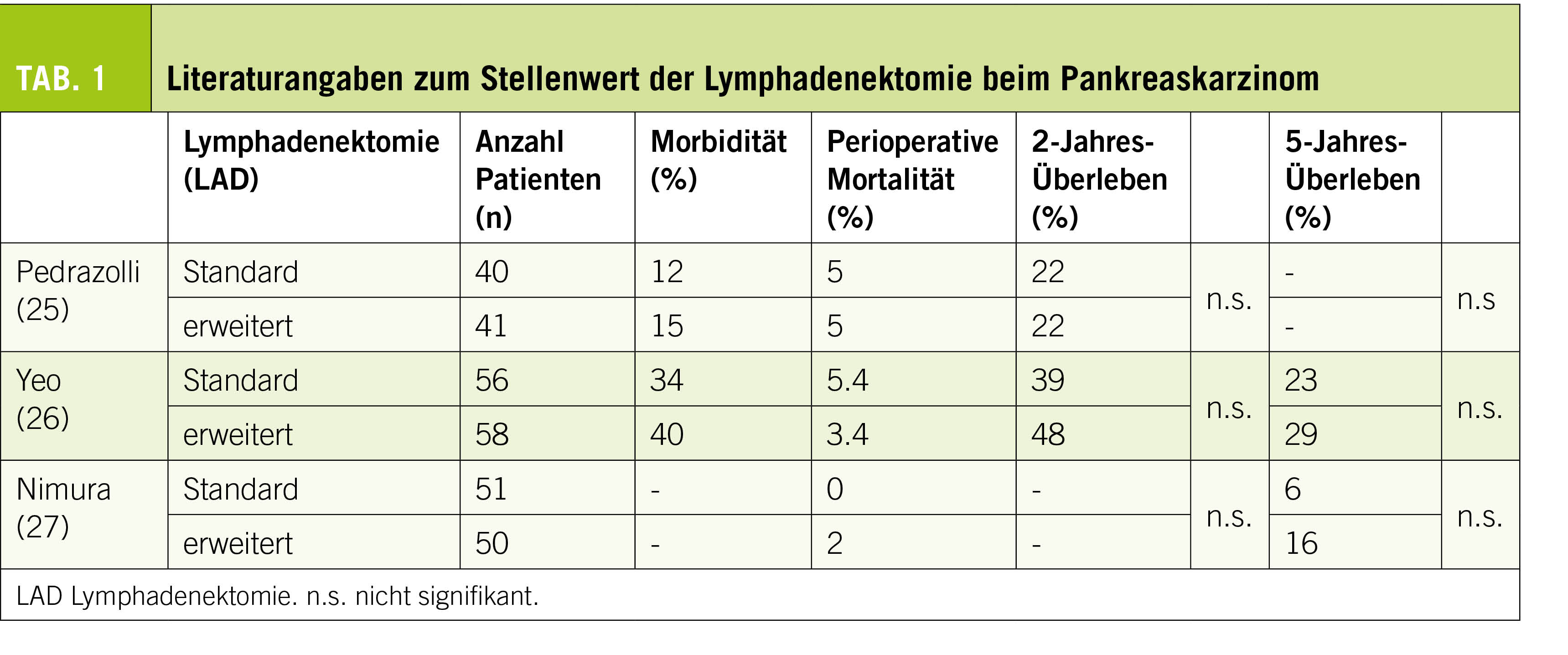
25. Pedrazzoli, S., et al., Standard versus extended lymphadenectomy associated with pancreatoduodenectomy in the surgical treatment of adenocarcinoma of the head of the pancreas: a multicenter, prospective, randomized study. Lymphadenectomy Study Group. Ann Surg, 1998. 228(4): p. 508-17.
26. Yeo, C.J., et al., Pancreaticoduodenectomy with or without extended retroperitoneal lymphadenectomy for periampullary adenocarcinoma: comparison of morbidity and mortality and short-term outcome. Ann Surg, 1999. 229(5): p. 613-22; discussion 622-4.
27. Nimura, Y., et al., Standard versus extended lymphadenectomy in radical pancreatoduodenectomy for ductal adenocarcinoma of the head of the pancreas: long-term results of a Japanese multicenter randomized controlled trial. J Hepatobiliary Pancreat Sci, 2012. 19(3): p. 230-41.
28. Sergeant, G., et al., Extended lymphadenectomy in patients with pancreatic cancer is debatable. World J Surg, 2013. 37(8): p. 1782-8.
29. Isaji, S., et al., International consensus on definition and criteria of borderline resectable pancreatic ductal adenocarcinoma 2017. Pancreatology, 2018. 18(1): p. 2-11.
30. Diener, M.K., et al., Pancreaticoduodenectomy (classic Whipple) versus pylorus-preserving pancreaticoduodenectomy (pp Whipple) for surgical treatment of periampullary and pancreatic carcinoma. Cochrane Database Syst Rev, 2008(2): p. CD006053.
31. Gagandeep, S., et al., Extended pancreatectomy with resection of the celiac axis: the modified Appleby operation. Am J Surg, 2006. 192(3): p. 330-5.
32. Kooby, D.A., et al., Left-sided pancreatectomy: a multicenter comparison of laparoscopic and open approaches. Ann Surg, 2008. 248(3): p. 438-46.
33. Kendrick, M.L. and D. Cusati, Total laparoscopic pancreaticoduodenectomy: feasibility and outcome in an early experience. Arch Surg, 2010. 145(1): p. 19-23.
34. Torphy, R.J., et al., Comparing Short-term and Oncologic Outcomes of Minimally Invasive Versus Open Pancreaticoduodenectomy Across Low and High Volume Centers. Ann Surg, 2018.
35. Boggi, U., et al., Laparoscopic pancreaticoduodenectomy: a systematic literature review. Surg Endosc, 2014.
36. Giulianotti, P.C., et al., Robotics in general surgery: personal experience in a large community hospital. Arch Surg, 2003. 138(7): p. 777-84.
37. Limani, P., et al., (Pancreatic cancer- a curable disease). Praxis (Bern 1994), 2015. 104(9): p. 453-60.
38. Martin, F., Hochspezialisierte Viszeralchirurgie: Zentralisiert oder Carte blanche? . BULLETIN DES MÉDECINS SUISSES – SCHWEIZERISCHE ÄRZTEZEITUNG – BOLLETTINO DEI MEDICI SVIZZERI 2018. 99(1–2): p. 24-27.
39. Guller, U., et al., Lower hospital volume is associated with higher mortality after oesophageal, gastric, pancreatic and rectal cancer resection. Swiss Med Wkly, 2017. 147: p. w14473.
40. Burris, H.A., 3rd, et al., Improvements in survival and clinical benefit with gemcitabine as first-line therapy for patients with advanced pancreas cancer: a randomized trial. J Clin Oncol, 1997. 15(6): p. 2403-13.
41. Oettle, H., et al., Adjuvant chemotherapy with gemcitabine vs observation in patients undergoing curative-intent resection of pancreatic cancer: a randomized controlled trial. JAMA, 2007. 297(3): p. 267-77.
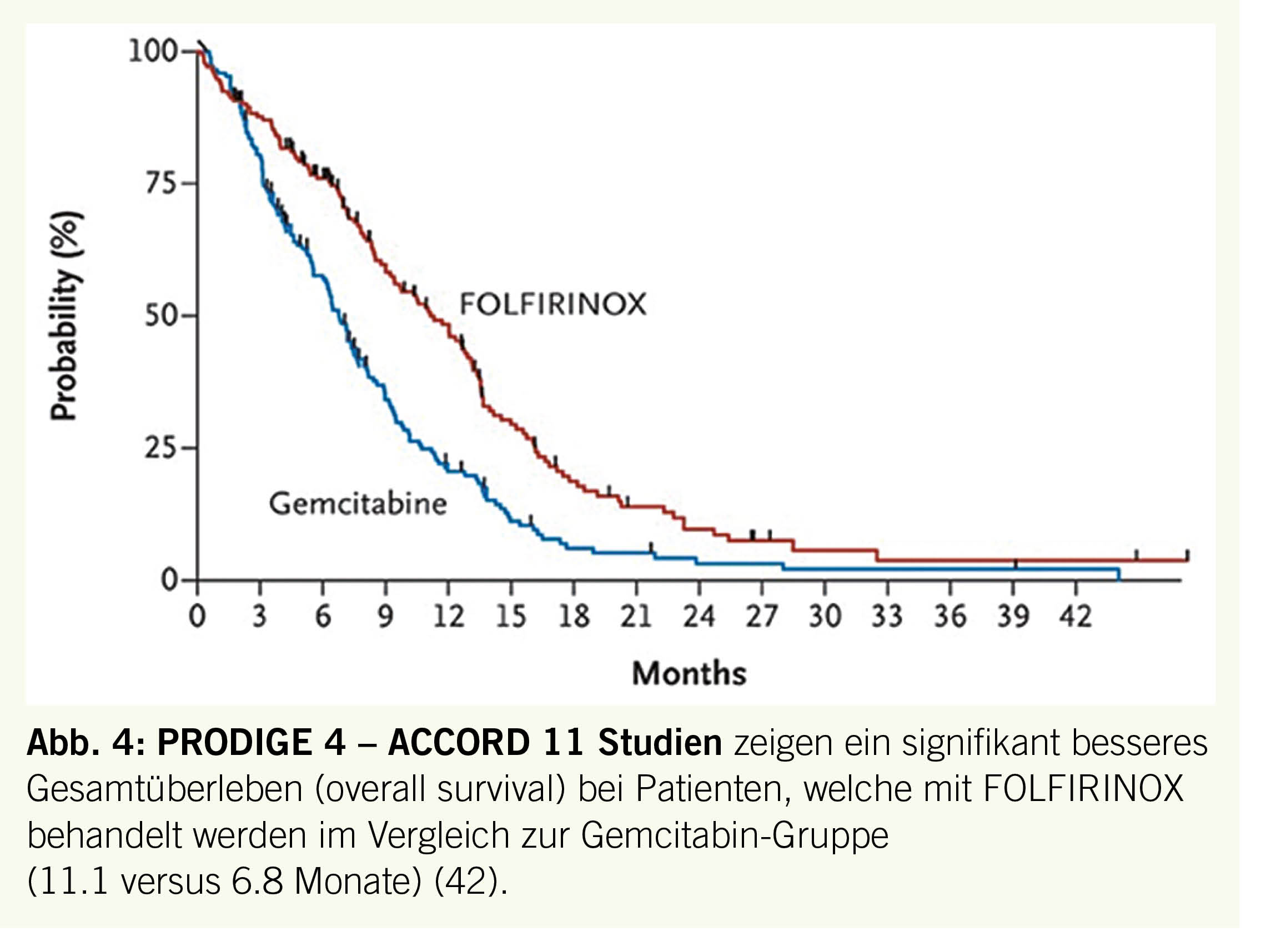
42. Conroy, T., et al., FOLFIRINOX versus gemcitabine for metastatic pancreatic cancer. N Engl J Med, 2011. 364(19): p. 1817-25.
43. Von Hoff, D.D., D. Goldstein, and M.F. Renschler, Albumin-bound paclitaxel plus gemcitabine in pancreatic cancer. N Engl J Med, 2014. 370(5): p. 479-80.
44. Datta, N.R., et al., „HEATPAC“ – a phase II randomized study of concurrent thermochemoradiotherapy versus chemoradiotherapy alone in locally advanced pancreatic cancer. Radiat Oncol, 2017. 12(1): p. 183.