Kongressausgabe ASH 2025

Hier finden Sie das PDF der ASH-Kongresszeitung

Editorial – Immuntherapie wird Alltag, Umsetzung wird Thema

Der ASH 2025 in Orlando hat gezeigt, wie konsequent sich die ­Hämatologie weiter in Richtung immunbasierter Strategien und präziser Sequenzplanung bewegt. Auf vielen Ebenen steht ­weniger der einzelne «Durchbruch» im Vordergrund als die Frage, wie sich neue Ansätze sinnvoll einordnen und im Alltag umsetzen lassen.

Beim multiplen Myelom stand dabei die Weiterentwicklung bispezifischer Konzepte im Vordergrund, mit Daten, die den Einsatz früher im Verlauf plausibel machen, gleichzeitig aber das Augenmerk auf Supportivmassnahmen und Monitoring lenken.

Bei indolenten Lymphomen wurde sichtbar, wie stark «Chemo-frei» ­inzwischen über gut definierte Kombinationen diskutiert wird – nicht als Prinzip, sondern als Option unter klaren ­Bedingungen. Damit rücken Fragen zur Tolerabilität, zum ­Infektionsmanagement und zur Patientenselektion ­automatisch mit in den Mittelpunkt.

Auch bei der AML wurde deutlich, dass Wirksamkeit allein nicht mehr reicht: Entscheidend ist zunehmend, was eine Strategie für den Ver­sorgungsalltag bedeutet, von frühen Komplikationen über Spitaltage bis zur kurzfristigen Lebensqualität.

Und schliesslich zeigte der Kongress, dass Innovation auch an logistischen Engpässen ansetzt: Konzepte wie In-vivo-CAR-T adressieren nicht nur Biologie, sondern auch Zugang und ­Prozessfragen.

Die folgenden Seiten fassen ausgewählte Abstracts so zusammen, dass sie sich für die Praxis einordnen lassen, als Orientierungshilfe für das, was bereits greifbar ist, und für das, was noch Diskussion und Erfahrung braucht.

Wir wünschen viel Vergnügen bei der Lektüre

Prof. Dr. med. Jakob R. Passweg,
Chefredaktor

Eleonore E. Droux,
Verlegerin und Publizistische Leitung

Nachwuchsförderung in der Onkologie: Kongress-Highlights der YOA-Teilnehmenden

Das Swiss Cancer Institute lanciert 2026 bereits zum elften Mal die Young Oncology Academy (YOA), ein Förderprogramm für den forschenden Nachwuchs. Es richtet sich an engagierte junge Ärztinnen und Ärzte aus den Berei­chen Onkologie, Hämatologie, Radioonkologie, Urologie, Gynäkologie, Patholo­gie oder Dermatologie, welche sich in onkologischen/hämatologischen Fragestellungen vertiefen wollen.

Das vielseitige einjährige Curriculum umfasst unter anderem Kongressbesuche im In- und Ausland (ESMO, EHA, ESTRO, ESP etc.), Präsentations- und Schreib­trainings, Networking, Grant-Submission-Workshops, Einblicke in Phase-I-Studien und die klinische und translationale Forschung sowie Einführungen in statistische Grundlagen. Die Teilnehmer werden von erfahrenen onkologischen Fachpersonen (Mentorinnen / Mentoren) begleitet und erhalten auch die Möglich­keit, eigene Studienprojekte zu entwickeln und vorzustellen.

Zum Jahresende publizieren die YOA-Teilnehmer ein Paper zu ihren persönlichen Highlights eines internationalen Kongresses. Wir freuen uns, die Arbeiten aus dem Jahr 2025 hier präsentieren zu dürfen. Die verschiedenen Artikel der Mentees werden in drei nacheinander folgenden Zeitschriften publiziert.

Wir beide haben diese YOA besucht und können diese sehr ­empfehlen. Weitere Informationen finden sich auf der Website des Swiss Cancer Institute:
https://www.swisscancerinstitute.ch/de/forschende/young-oncology-academy/

Dr. med. Tämer El Saadany                                                   Dr. med. Eveline Daetwyler

Novel Genetic Insights in Lymphoma Biology: Follicular Lymphoma Subtypes and ASXL1-Related Disease

Review YOA 2025: Annaïse Julie Jauch

Mentee: Annaïse Julie Jauch, University Hospital Basel
Mentor: Prof Ubran Novak, University Hospital of Bern/Inselspital
Speciality: Mentee Haematology, Mentor Prof Urban Novark Medical Oncology
Year: Young Oncology Academy 2025

Review paper on ESID EHA SIOPE Focused Symposium 2025 I Vienna November 18–20, 2025. The scientific meeting was dedicated to the interplay of immunology and haematology, with particular emphasis on the somatic and germline genetic landscapes shaping malignancies.

Whole-genome sequencing reveals three follicular lymphoma subtypes with distinct cell of origin and patient outcomes (by Weicheng Ren et al. 2025)

Follicular lymphoma (FL) is a malignancy of germinal-center B-cells and a common non-Hodgkin lymphoma subtype in Western Europe (1). While FL typically follows an indolent course and recent advances in treatment avenues have significantly improved patient survival, the disease remains incurable and demonstrates a considerable clinical heterogeneity. A patient subset experiences early progression, treatment refractoriness, or histological transformation (2).

The WHO 2022 classification recognises four FL-subtypes: Classical FL, FL with unusual cytological features, follicular large B-cell lymphoma and FL with a predominantly diffuse growth pattern (3). Although, this classification enhances our understanding of FL biology, genetic-based sub-classification remains challenging. The m7-FLIPI risk model integrates seven somatic mutations with clinical parameters to predict progression-free survival (4), however the algorithm does not incorporate FL hallmark translocations (BCL-2::IGH, BCL-6 associated rearrangements).

The work by Ren et al. aimed to define clinically relevant genetic FL subtypes, through whole-genome and transcriptomic sequencing of 131 primary FL samples. Using integrated clustering of copy number variants (CNVs), somatic mutations and structural variants, they identified three genetic subtypes. Cluster 1 (C1) was characterised by recurrent BCL-6 translocations and mutations in NOTCH and NF-κB. C2 on the other hand was defined by high frequency of BCL2 translocations and genetic alterations in chromatin modifier genes (CREBBP, KMT2D, EZH2). C3 lacked BCL2/BCL6 translocations but exhibited a high CNV burden. Clinically, C1 was associated with a favourable prognosis, while C3 correlated with inferior progression-free survival and overall survival.

In summary, the work by W. Ren and colleagues proposes three genetic FL subtypes with distinct biological features, genetic propensities and clinical outcome. Future work will have to validate the proposed risk stratification, and define its clinical use in view of the current and future therapeutic options.

ASXL1 deficiency causes epigenetic dysfunction, combined immunodeficiency, and EBV-associated lymphoma (by Maggie P. Fu et al. 2025)

Inborn errors of immunity (IEI) are germline disorders affecting immune system development and/or function (5). Malignancy is the second leading cause of death in IEI patients (6). Notably, one third of newly identified monogenetic disorders are established by studying a single case (7), following methodical validation to establish causality.

Fu and colleagues described a female patient, with recurrent pneumonia requiring hospitalisation, including one severe EBV-related episode. At the age of three, she developed vaccine-strain rubella-positive granulomas following live-attenuated MMR vaccination that persisted over 10 years. Laboratory findings revealed erythrocytic macrocytosis, T-cell lymphopenia and hypogammaglobulinaemia. Chronic EBV replication was noted. At the age of 14 years, she developed EBV-associated advanced Hodgkin lymphoma (stage IVA, mixed cellularity subtype). Following polychemotherapy and checkpoint inhibitors, persistent disease necessitated allogeneic haematopoietic stem cell transplantation from a matched-unrelated donor. The patient remained well 18 months post- trans-plantation.

Given the severe clinical phenotype and young age, a genetic cause was assumed, and whole-genome and exome sequencing was performed. Two novel compound heterozygous missense mutations in ASXL1 were identified. While somatic alterations in the epigenetic modifier ASXL1 are well-characterised in clonal haematopoiesis and haematological malignancies, germline variants have not been previously associated with immune dysfunction.

The authors demonstrated reduced ASXL1 protein levels in patient-derived T-cells and fibroblasts. Cells transfected with the ASXL1 variants recapitulated the low protein levels. This was paralleled with the loss of differentially methylated sites and accelerated epigenetic aging compared to healthy controls. To address causality, the authors transduced patient-derived T-cells with wild-type ASXL1, partially rescuing the methylation defects and epigenetic aging.

Profound T-cell exhaustion, reduced T- and NK-cell numbers as well as impaired cytotoxicity, suggested that chronic viral replication and impaired immunosurveillance lead to Hodgkin lymphoma development.

In summary, the authors identified biallelic germline ASXL1 missense mutations as a novel IEI (8). They suggest genetic testing in patients with chronic viral infections, viral-associated malignancy and combined immunodeficiency. Allogeneic bone marrow transplantation in such rare cases will likely cure the immunodeficiency, and the related haematologic malignancy.

Literatur
1. Dreyling M, Ghielmini M, Rule S, et al. Newly diagnosed and relapsed follicular lymphoma: ESMO Clinical Practice Guidelines for diagnosis, treatment and follow-up. Ann Oncol. 2021;32(3):298-308.
2. Carbone A, Roulland S, Gloghini A, et al. Follicular lymphoma. Nat Rev Dis Primers. 2019;5(1):83.
3. Alaggio R, Amador C, Anagnostopoulos I, et al. The 5th edition of the World Health Organiza-tion Classification of Haematolymphoid Tumours: Lymphoid Neoplasms. Leukemia. 2022;36(7):1720-1748.
4. Pastore A, Jurinovic V, Kridel R, et al. Integration of gene mutations in risk prognostication for patients receiving first-line immunochemotherapy for follicular lymphoma: a retrospective analysis of a prospective clinical trial and validation in a population-based registry. Lancet Oncol. 2015;16(9):1111-1122.
5. Notarangelo LD, Bacchetta R, Casanova JL, Su HC. Human inborn errors of immunity: An expanding universe. Sci Immunol. 2020;5(49).
6. Fekrvand S, Abolhassani H, Esfahani ZH, et al. Cancer Trends in Inborn Errors of Immunity: A Systematic Review and Meta-Analysis. J Clin Immunol. 2024;45(1):34.
7. Poli MC, Aksentijevich I, Bousfiha AA, et al. Human inborn errors of immunity: 2024 update on the classification from the International Union of Immunological Societies Expert Committee. Journal of Human Immunity. 2025;1(1).
8. Fu MP, Sharma M, Yousefi P, et al. ASXL1 deficiency causes epigenetic dysfunction, com-bined immunodeficiency, and EBV-associated lymphoma. J Exp Med. 2025;222(10).

Liquid Biopsy in the clinic – My highlights from the European Congress of Pathology 2025

Review YOA 2025: Albert Baschong

Mentee: Dr. med. Albert Baschong, Institut für Pathologie und Molekularpathologie Universitätsspital Zürich
Mentor: Prof. Matthias Matter, Institut für Pathologie Universitätsspital Basel
Speciality: Pathology
Year: Young Oncology Academy 2025

In recent years, it has been evident that pathology is in a state of profound change. The advent of novel molecular and digital methods has influenced pathology substantially. This was also demonstrated at this year’s European Congress of Pathology in Vienna, which took place under the motto “Tradition meets Future.” I would therefore like to give a brief insight into the session liquid biopsy in solid tumors and introduce an exciting analysis method and its potential applications in Ewing sarcoma. This review has been adapted from a presentation given to the SCI Sarcoma Interest Group.

Liquid biopsy is a procedure that extracts molecular information from bodily fluids. Tumour cells release their molecular signature in various forms, whether as circulating tumour cells (CTCs), in exosomes or, as free DNA (circulating tumour DNA, ctDNA) after apoptosis. CtDNA is a part of cell-free DNA (cfDNA). The majority of cfDNA consists of leukocyte residues. Blood is typically used as the fluid for liquid biopsy, but other body fluids (e.g. pleural effusion, ascites, cerebrospinal fluid) can also be employed.
This “liquid” molecular tumour analysis has a wide range of applications, but includes mainly the analysis of mutational signatures, methylation and changes in fragmentation.

The ease with which samples can be obtained also highlights their greatest advantage over traditional tissue biopsies: low invasiveness. In addition, multiple metastatic sites can be detected in their entirety, as can the reflection of a tumor’s heterogeneity. On the other hand, ctDNA may be completely absent or only present at low concentrations in liquid samples. This makes the samples very sensible and requires highly sensitive detection methods (e.g. digital droplet PCR, NGS). In addition, some analyses, such as fusion analyses, CNV and TMB, are more challenging. CtDNA levels can also vary greatly within and between tumour types. Consequently, the use of liquid biopsy is not yet widely adopted.
However, there are various established applications of liquid biopsies. Examples include ESR1 testing in breast cancer and resistance mutation testing in lung cancer.

Liquid biopsy is not yet widely used in soft tissue tumours. Ewing sarcoma is a tumour that develops in bones and soft tissues. It has a low mutational rate and highly fragmented DNA. Its detection in liquid biopsies proves difficult. Peneder et al. developed a bioinformatic tool, called LIQUORICE, to detect ctDNA using fragmentation patterns. Interestingly, DNA methylation influences fragmentation patterns by affecting chromatin structure. Their developed algorithm uses epigenetic signals and fragmentation patterns for determining the tumor of origin. With this they were able to distinguish liquid biopsies from Ewing sarcoma patients from other sarcomas, quantify tumor burden and track treatment response.
In summary, liquid biopsy is an exciting analytic method. Combining it with digital solutions opens up new possibilities for its broader application.

Literatur
Peneder P, Bock C, Tomazou EM. LIQUORICE: detection of epigenetic signatures in liquid biopsies based on whole-genome sequencing data. Bioinform Adv. 2022;2(1):vbac017. Published 2022 Mar 23. doi:10.1093/bioadv/vbac017

Peneder P, Stütz AM, Surdez D, et al. Multimodal analysis of cell-free DNA whole-genome sequencing for pediat-ric cancers with low mutational burden. Nat Commun. 2021;12(1):3230. Published 2021 May 28. doi:10.1038/s41467-021-23445-w

ESMO 2025 Highlights in Gastric and Gastroesophageal ­Junction Adenocarcinoma (GC/GEJA) – Insights from ­MATTERHORN, PHER-FLOT/IKF-053 and FORTITUDE-101

Review YOA 2025: Sabine Raimann

Mentee: Dr. med. Sabine Raimann, Cantonal Hospital Winterthur
Mentor: Prof. Dr. med. Viviane Hess, University Hospital Basel
Speciality: Medical Oncology
Year: Young Oncology Academy 2025

GC/GEJA remain a major global health concern, with poor survival despite aggressive treatment. Molecular insights have enabled the integration of immunotherapy and targeted agents into advanced disease treatment, guided by biomarkers such as HER2, PD-L1, MSI and CLDN18.2 (1–5). Explorative biomarkers such as FGFR2b are being investigated with targeted therapies in development.

Curative surgical resection remains the cornerstone of localized GC/GEJA management. Perioperative chemotherapy improves prognosis with the FLOT (fluorouracil, leucovorin, oxaliplatin, docetaxel) regimen widely recognized as the standard of care (6, 7). To further improve the efficacy of perioperative treatment, two trials presented at the 2025 ESMO Congress assessed novel regimens with already proven benefit in the palliative setting. The final overall survival (OS) results from the Phase III MATTERHORN trial were presented, comparing perioperative PD-L1 inhibitor durvalumab plus FLOT with placebo plus FLOT in 948 patients with resectable, locally advanced GC/GEJA (8). At a median follow-up of 43 months durvalumab plus FLOT reduced the risk of death by 22 % (HR 0.78; 95 % CI 0.63-0.96; P=0.021) regardless of PD-L1 status. Three-year OS was 69 % with the durvalumab-based regimen compared to 62 % with FLOT. 5 % of patients had MSI-high tumor tissue, evenly distributed between arms. However, MSS status was unknown in around 30 % of patients. HER2 was not assessed. 20 % of patients died within 15 months in both arms, underscoring the need for biomarker-driven approaches to tackle the problem of early mortality.

A biomarker-driven strategy in the same setting was chosen in the phase II, single-arm PHER-FLOT/IKF-053 trial for patients with HER2-positive GC/GEJA. This trial evaluated the efficacy and safety of combining FLOT, trastuzumab, and pembrolizumab in the perioperative setting in 31 patients with resectable, locally advanced HER2-positive GC/GEJA (9). This trial follows the KEYNOTE-811 trial that established this combination for advanced disease (10). The pathological complete response rate was 48.4 % (15 of 31), meeting the co-primary endpoint and exceeding historical FLOT benchmarks of 15–20 %. Two-thirds of patients achieved major pathological response. The safety profile aligned with expectations, except the elevated grade 3 diarrhea (12 of 31) and reoperation rate (8 of 30). No 30-day postoperative mortality occurred. The long-term results – particularly the 2-year disease-free survival data (co-primary endpoint) – will determine whether this perioperative approach should be further explored in larger trials aiming for a new benchmark for this molecular subgroup.

Shifting focus to an emerging biomarker in the palliative setting: the randomized, placebo-controlled Phase III FORTITUDE-101 trial evaluated bemarituzumab, a first-in-class anti-FGFR2b antibody, added to mFOLFOX6 (fluorouracil, leucovorin, oxaliplatin) in 547 patients with unresectable or metastatic FGFR2b-expressing (2+/3+ staining in ≥ 10 % of tumor cells), non-HER2-positive GC/GEJA. At the primary analysis (median follow-up 11.8 months), median OS was 17.9 months with bemarituzumab and 12.5 months in the placebo arm (HR 0.61; 95 % CI, 0.43 to 0.86; P=0.005). With a longer median follow-up of 19.4 months no OS benefit was observed (14.5 months versus 13.2 months; HR 0.82; 95 % CI 0.62–1.08). Grade ≥ 3 treatmentrelated adverse events occurred in 60 % of patients receiving bemarituzumab, mainly reversible corneal events, compared with 18.4 % in the placebo arm. The converging OS curves suggest a limited efficacy, likely due to data maturity and biomarker heterogeneity rather than treatment imbalance, as treatment exposure and subsequent therapy were similar between arms. Preclinical studies showed bemarituzumab sensitizes tumors to anti-PD-1 antibodies by modulating the microenvironment (11). The ongoing phase Ib/III FORTITUDE-102 trial is exploring mFOLFOX6 plus nivolumab and either bemarituzumab or placebo in patients with advanced FGFR2b-expressing GC/GEJA.
These trials highlight the evolving landscape of GC/GEJA research with a move toward precision-based medicine. Furthermore, it is crucial to develop strategies targeting tumor heterogeneity and biomarker-based focal positivity, as these could significantly impact treatment responses.

Literatur
1. Bang, Y. J. et al. Trastuzumab in combination with chemotherapy versus chemotherapy alone for treatment of HER2-positive advanced gastric or gastro-oesophageal junction cancer (ToGA): A phase 3, open-label, randomised controlled trial. Lancet 376, 687–697 (2010).
2. Tabernero, J. et al. KEYNOTE-859: a Phase III study of pembrolizumab plus chemotherapy in gastric/gastroesophageal junction adenocarcinoma. Future Oncol. 17, 2847–2855 (2021).
3. Janjigian, Y. Y. et al. First-line nivolumab plus chemotherapy versus chemotherapy alone for advanced gastric, gastro-oesophageal junction, and oesophageal adenocarcinoma (CheckMate 649): a randomised, open-label, phase 3 trial. Lancet 398, 27–40 (2021).
4. Chao, J. et al. Assessment of Pembrolizumab Therapy for the Treatment of Microsatellite Instability–High Gastric or Gastroesophageal Junction Cancer Among Patients in the KEYNOTE-059, KEYNOTE-061, and KEYNOTE-062 Clinical Trials. JAMA Oncol. 7, 895–902 (2021).
5. Shitara, K. et al. Zolbetuximab plus mFOLFOX6 in patients with CLDN18.2-positive, HER2-negative, untreated, locally advanced unresectable or metastatic gastric or gastro-oesophageal junction adenocarcinoma (SPOTLIGHT): a multicentre, randomised, double-blind, phase 3 trial. Lancet 401, 1655–1668 (2023).
6. Lordick, F. et al. Gastric cancer: ESMO Clinical Practice Guideline for diagnosis, treatment and follow-up. Ann. Oncol. 33, 1005–1020 (2022).
7. Al-Batran, S. E. et al. Perioperative chemotherapy with fluorouracil plus leucovorin, oxaliplatin, and docetaxel versus fluorouracil or capecitabine plus cisplatin and epirubicin for locally advanced, resectable gastric or gastro-oesophageal junction adenocarcinoma (FLOT4): a r…. Lancet 393, 1948–1957 (2019).
8. Janjigian, Y. Y. et al. Perioperative Durvalumab in Gastric and Gastroesophageal Junction Cancer. N. Engl. J. Med. 393, 217–230 (2025).
9. Stein, A. et al. Perioperative pembrolizumab, trastuzumab and FLOT in HER2-positive localized esophagogastric adenocarcinoma: a phase 2 trial. Nat. Med. 2025 1–8 (2025). doi:10.1038/s41591-025-03979-y
10. Janjigian, Y. Y. et al. Pembrolizumab plus trastuzumab and chemotherapy for HER2-positive gastric or gastro-oesophageal junction adenocarcinoma: interim analyses from the phase 3 KEYNOTE-811 randomised placebo-controlled trial. Lancet 402, 2197–2208 (2023).
11. Xiang, H. et al. Preclinical characterization of bemarituzumab, an anti-FGFR2b antibody for the treatment of cancer. MAbs 13, (2021).

Trastuzumab Deruxtecan in the neoadjuvant and post neoadjuvant treatments

Review YOA 2025: Artemisia Kakourou

Mentee: Artemisia Kakourou, medical oncologist, CHUV
Mentor: Professor Miklos Pless, Cantonal Hospital Winterthur
Speciality: Medical Oncology
Year: Young Oncology Academy 2025

Introduction

Trastuzumab deruxtecan (T-DXd) is an antibody–drug conjugate (ADC) that has emerged as one of the most active HER2-targeted ADC, demonstrating superior survival outcomes compared with earlier HER2-directed therapies in metastatic disease. Two major clinical trials, the DESTINY-Breast11 and DESTINY-Breast05 extend T-DXd evaluation into the neoadjuvant and post-neoadjuvant settings, respectively, addressing major unmet needs for patients with high-risk HER2-positive early breast cancer (eBC). This review summarizes the results for efficacy, safety and implications of these two pivotal trials, and proposes considerations for optimal integration of T-DXd in curative treatment strategies.

DESTINY-Breast11: Neoadjuvant T-DXd–THP Versus ddAC–THP

Pathologic complete response (pCR) is a strong predictor of improved event-free and overall survival in HER2-positive eBC (1, 2, 3). Standard neoadjuvant regimens combining chemotherapy with HER2-targeted therapy achieve a pCR of about 39–69 % (4, 5, 6, 7, 8, 9), with lower rates in hormone-receptor–positive and clinically high-risk patients (5, 10). Traditional regimens also carry significant acute toxicities (9, 11) and long-term risks such as cardiotoxicity (12, 13), neuropathy (5) and secondary leukemias (12). Because T-DXd has already shown superior survival compared with prior standard therapies in metastatic disease (14, 15), DESTINY-Breast11 was designed to explore whether incorporating T-DXd in the neoadjuvant setting could improve efficacy and safety.

DESTINY-Breast11 compared neoadjuvant T-DXd combined with paclitaxel, trastuzumab, and pertuzumab (THP) versus dose-dense doxorubicin plus cyclophosphamide (ddAC) followed by THP, with patients receiving either 4 cycles of T-DXd followed by 4 cycles of THP, or 4 cycles of ddAC followed by 4 cycles of THP before surgery (16). A third arm evaluated T-DXd alone but was closed early following the Independent Data Monitoring Committee recommendation, for several reasons, including a lower pCR rate. T-DXd-THP demonstrated a statistically significant improvement in pathologic complete response with a pCR rate of 67.3 % and an improvement of 11.2 % over ddAC-THP (95 % CI, 4.0–18.3 %; P=0.003). Benefits were seen in both hormone receptor (HR)-positive tumors (61.4 % vs 52.3 %; ΔpCR 9.1 %, 95 % CI 0.2–17.9 %) and HR-negative tumors (83.1 % vs 67.1 %; ΔpCR 16.1 %, 95 % CI 3.0–28.8 %). Also, early event free survival (EFS) data (4.5 % maturity) showed a hazard ratio of 0.56 (95 % CI 0.26–1.17). This is the first phase III evidence showing that replacing chemotherapy with an ADC in neoadjuvant setting improves pCR. Residual cancer burden analysis showed that more than 81 % of patients in the T-DXd-THP arm had no or minimal residual invasive disease (RCB-0 or RCB-I), compared with 69 % in the ddAC-THP arm. Of note, 78 % of hormone-receptor-positive tumors achieved RCB-0/I, highlighting the benefit in a group that traditionally responds less well. Importantly, the safety profile of T-DXd-THP was more favorable than ddAC-THP, with fewer grade 3 or higher adverse events, fewer serious adverse events, and reduced ventricular dysfunction (1.3 % vs 6.1 %). Rates of interstitial lung disease were low and comparable between groups (4.4 % vs. 5.1 %).

DESTINY-Breast11 concluded that T-DXd-THP achieved higher pCR rates and a more favorable safety profile than ddAC–THP. However, the trial has important limitations: the comparator arm no longer reflects current standard-of-care chemotherapy (which is mainly carboplatin, a taxane plus (HP17), and only about half of patients without pCR received post-neoadjuvant trastuzumab emtansine (T-DM1), which is now recommended. Since the chemotherapy regimen in the standard arm does not meet current standards – which achieve pCR rates comparable to T-DXd-THP and are also anthracycline-free – the definitive role of T-DXd-THP in the neoadjuvant setting remains to be established.

DESTINY-Breast05: Adjuvant T-DXd Versus T-DM1 for Residual Disease

The DESTINY-Breast05 trial evaluated the use of adjuvant T-DXd in HER2-positive eBC patients who had residual invasive disease following neoadjuvant therapy (NAT) – a group known to have higher recurrence risk. In the earlier KATHERINE trial, T-DM1 had become the standard adjuvant therapy in this setting, after showing significant improvements in invasive disease-free survival (IDFS) and over-all survival (OS) (18, 19) over trastuzumab. Still, outcomes in patients with advanced locoregional disease or positive nodal status remained modest (19, 20), and CNS recurrence was not reduced (20). Given the superiority of T-DXd over T-DM1 in metastatic disease (21, 22), DESTINY-Breast05 compared these two agents in patients with high-risk HER2 positive early breast cancer who had residual disease after neoadjuvant therapy. High-risk was defined as either inoperable disease prior to neoadjuvant therapy (cT4, N0 3, M0 or cT1 3, N2 3, M0) or operable disease (cT1 3, N0 1, M0) with axillary node–positive residual disease (ypN1 3) after neoadjuvant therapy. In the experimental arm, patients received T-DXd every 3 weeks for 14 cycles, while in the comparator arm, patients received T-DM1 3.6 mg/kg IV every 3 weeks for 14 cycles. Notably, nearly half of the study population were of Asian descent.

DESTINY-Breast05 demonstrated that at 3 years, IDFS was 92.4 % with T-DXd versus 83.7 % with T-DM1, corresponding to a hazard ratio (HR) of 0.47 (95 % CI, 0.34–0.66). The IDFS benefit was consistent across all prespecified subgroups, regardless of hormone-receptor status, nodal involvement, baseline stage, or residual disease characteristics. Secondary endpoints also showed advantages for T-DXd. Three year disease free survival (DFS) was 92.3 % with T-DXd versus 83.5 % with T-DM1 (HR 0.47; 95 % CI, 0.34–0.66), and 3 year distant recurrence free interval (DRFI) was 93.9 % versus 86.1 % (HR 0.49; 95 % CI, 0.34–0.71), favoring T-DXd. Notably, fewer central nervous system (CNS) metastases were reported in the T-DXd arm, with a 3-year brain metastasis–free interval of 97.6 % versus 95.8 % with T-DM1. Safety was considered manageable. Interstitial lung disease (ILD) occurred in 9.6 % of patients receiving T-DXd, mostly grade 1–2. Three deaths occurred in the T-DXd arm (two due to ILD/pneumonitis and one due to unrelated respiratory infection), while five occurred in the T-DM1 arm from various unrelated causes. Cardiotoxicity was rare, occurring in 2.9 % of T-DXd patients versus 1.7 % of T-DM1 patients, with mostly asymptomatic left ventricular declines and no treatment-related heart failure. More than 72 % of patients in both arms completed the full 14 cycles of therapy.

DESTINY-Breast05 concluded that adjuvant T-DXd showed better efficacy and a manageable safety profile in high-risk HER2-positive eBC patients with residual disease after NAT. High-risk was defined as either inoperable disease at presentation or residual axillary node–positive disease after neoadjuvant treatment; in this population, T-DXd represents a new post-neoadjuvant standard. For patients with residual disease who do not meet these high-risk criteria, T-DM1 remains the standard of care.

Discussion

When viewed together, DESTINY-Breast11 and DESTINY-Breast05 demonstrate that T-DXd has strong efficacy across both neoadjuvant and post-neoadjuvant settings. In the neoadjuvant trial, T-DXd-THP achieved high pCR rates with fewer severe side effects compared with an anthracycline base chemotherapy backbone. In the post-neoadjuvant trial, T-DXd outperformed T-DM1, further reducing recurrence risk in a high-risk group. The optimal sequencing T-DXd in early HER2-positive breast cancer remains an important unanswered question. Long-term outcomes with neoadjuvant T-DXd followed by THP are not yet known. In addition, the management of patients who receive neoadjuvant T-DXd-THP but still present with residual disease at surgery remains undefined. At the present time, it is unclear whether T-DXd should be preferentially used in the neoadjuvant setting, the post-neoadjuvant setting, or potentially both, leaving its optimal placement within the treatment sequence an active area of ongoing investigation. Continued follow-up is required to clarify long-term safety, survival outcomes, and the most effective therapeutic strategy for integrating T-DXd into curative-intent care.

Overall, these two trials show that trastuzumab deruxtecan is becoming an important component of curative-intent therapy in HER2-positive eBC and has the potential to redefine treatment strategies in both the neoadjuvant and post-neoadjuvant settings.

Literatur
1. Spring, L.M. et al. Pathologic Complete Response after Neoadjuvant Chemotherapy and Impact on Breast Cancer Recurrence and Survival: A Comprehensive Meta-analysis. Clin Cancer Res 26, 2838-2848 (2020).
2. Cortazar, P. et al. Pathological complete response and long-term clinical benefit in breast cancer: the CTNeoBC pooled analysis. Lancet 384, 164-172 (2014).
3. Davey, M.G., Browne, F., Miller, N., Lowery, A.J. & Kerin, M.J. Pathological complete response as a surrogate to improved survival in human epidermal growth factor receptor-2-positive breast cancer: systematic review and meta-analysis. BJS Open 6 (2022).
4. Gianni, L. et al. Efficacy and safety of neoadjuvant pertuzumab and trastuzumab in women with locally advanced, inflammatory, or early HER2-positive breast cancer (NeoSphere): a randomised multicentre, open-label, phase 2 trial. Lancet Oncol 13, 25-32 (2012).
5. Hurvitz, S.A. et al. Neoadjuvant trastuzumab, pertuzumab, and chemotherapy versus trastuzumab emtansine plus pertuzumab in patients with HER2-positive breast cancer (KRISTINE): a randomised, open-label, multicentre, phase 3 trial. Lancet Oncol 19, 115-126 (2018).
6. Masuda, N. et al. A randomized, 3-arm, neoadjuvant, phase 2 study comparing docetaxel + carboplatin + trastuzumab + pertuzumab (TCbHP), TCbHP followed by trastuzumab emtansine and pertuzumab (T-DM1+P), and T-DM1+P in HER2-positive primary breast cancer. Breast Cancer Res Treat 180, 135-146 (2020).
7. Schneeweiss, A. et al. Pertuzumab plus trastuzumab in combination with standard neoadjuvant anthracycline-containing and anthracycline-free chemotherapy regimens in patients with HER2-positive early breast cancer: a randomized phase II cardiac safety study (TRYPHAENA). Ann Oncol 24, 2278-2284 (2013).
8. Swain, S.M. et al. Pertuzumab, trastuzumab, and standard anthracycline- and taxane-based chemotherapy for the neoadjuvant treatment of patients with HER2-positive localized breast cancer (BERENICE): a phase II, open-label, multicenter, multinational cardiac safety study. Ann Oncol 29, 646-653 (2018).
9. van Ramshorst, M.S. et al. Neoadjuvant chemotherapy with or without anthracyclines in the presence of dual HER2 blockade for HER2-positive breast cancer (TRAIN-2): a multicentre, open-label, randomised, phase 3 trial. Lancet Oncol 19, 1630-1640 (2018).
10. Huober, J. et al. Atezolizumab With Neoadjuvant Anti-Human Epidermal Growth Factor Receptor 2 Therapy and Chemotherapy in Human Epidermal Growth Factor Receptor 2-Positive Early Breast Cancer: Primary Results of the Randomized Phase III IMpassion050 Trial. J Clin Oncol 40, 2946-2956 (2022).
11. Hennessy, M.A. & Morris, P.G. Optimizing Anti-HER2 Therapy in early breast cancer: updates from the KRISTINE trial. Ann Palliat Med 9, 504-509 (2020).
12. Loibl, S. et al. Early breast cancer: ESMO Clinical Practice Guideline for diagnosis, treatment and follow-up. Ann Oncol 35, 159-182 (2024).
13. van der Voort, A. et al. Three-Year Follow-up of Neoadjuvant Chemotherapy With or Without Anthracyclines in the Presence of Dual ERBB2 Blockade in Patients With ERBB2-Positive Breast Cancer: A Secondary Analysis of the TRAIN-2 Randomized, Phase 3 Trial. JAMA Oncol 7, 978-984 (2021).
14. Cortes, J. et al. Trastuzumab deruxtecan versus trastuzumab emtansine in HER2-positive metastatic breast cancer: long-term survival analysis of the DESTINY-Breast03 trial. Nat Med 30, 2208-2215 (2024).
15. Li, J., Hao, C., Wang, H., Pan, Y. & Jiang, Z. DESTINY-Breast09, new breakthroughs in first-line therapy for HER2-positive advanced breast cancer. Transl Breast Cancer Res 6, 28 (2025).
16. Harbeck, N. et al. Neoadjuvant trastuzumab deruxtecan alone or followed by paclitaxel, trastuzumab, and pertuzumab for high-risk HER2-positive early breast cancer (DESTINY-Breast11): a randomised, open-label, multicentre, phase III trial. Ann Oncol (2025).
17. Burstein, H.J. et al. Tailoring treatment to cancer risk and patient preference: the 2025 St Gallen International Breast Cancer Consensus Statement on individualizing therapy for patients with early breast cancer. Ann Oncol (2025).
18. von Minckwitz, G. et al. Trastuzumab Emtansine for Residual Invasive HER2-Positive Breast Cancer. N Engl J Med 380, 617-628 (2019).
19. Geyer, C.E., Jr. & Loibl, S. Switching to T-DM1 remains justified in patients with HER2-negative residual invasive breast cancer after neoadjuvant therapy. Breast 81, 104450 (2025).
20. Mamounas, E.P. Characteristics of residual invasive breast cancer after neoadjuvant therapy in the KATHERINE study. Ann Oncol 32, 1191-1192 (2021).
21. Modi, S. et al. Trastuzumab Deruxtecan in Previously Treated HER2-Positive Breast Cancer. N Engl J Med 382, 610-621 (2020).
22. Hurvitz, S.A. et al. Trastuzumab deruxtecan versus trastuzumab emtansine in patients with HER2-positive metastatic breast cancer: updated results from DESTINY-Breast03, a randomised, open-label, phase 3 trial. Lancet 401, 105-117 (2023).


Dr. med. Tämer El Saadany

Kantonsspital Graubünden
Onkologie / Hämatologie
Loestrasse 170
7000 Chur

Dr. med. Eveline Daetwyler

HOCH Health Ostschweiz
Rorschacher Strasse 95
9007 St.Gallen

Ausgewählte Studien aus der Hämato-Onkologie

Universell basenbearbeitete CAR7-T-Zellen für die akute lymphoblastische T-Zell-Leukämie

Die CAR-T-Therapien haben sich etabliert: In Europa wurden bisher über 20 000 Patienten mit B-Zell-Tumoren und einige mit Autoimmunkrankheiten behandelt. Bei T-Zell-Tumoren besteht das Problem des Fratrizids (Brudermord), d. h., wenn sich die CAR-T-Zellen gegenseitig zerstören, nützt das nichts gegen den Tumor. Folgende Lösung wird hier präsentiert.

CD7 ist eine attraktive Zielstruktur, da sie auf allen T-Zell-Tumoren vorhanden ist (ausgenommen sind die kutanen T-Zell-Tumoren). Der grösste Bedarf besteht bei der rezidivierten/refraktären T-akuten lymphoblastären Leukämie. Über erste Patienten wurde mit triple-eliminierten CD7-spezifischen CAR-T-Zellen berichtet, d. h. ohne T-Zell-Rezeptor (um eine allogene Gabe ohne GvHD zu ermöglichen), ohne CD52 (um eine Lymphodepletion mit CAMPATH durchführen zu können) und ohne CD7 (um den Fratrizid zu umgehen).

Dies ist eine Phase-I-Studie, in der BE-CAR7-T-Zellen bei Kindern mit rezidivierter/refraktärer T-ALL nach Fludarabine und Cyclophosphamid sowie CAMPATH angewendet wurden. Erwachsene Patienten konnten auch in einem Erweiterungsprogramm behandelt werden. Im Anschluss an das Erreichen einer Remission war eine allogene Stammzelltransplantation geplant. Diese Therapie wurde bei neun Kindern und zwei Erwachsenen angewendet. Zirkulierende allogene CAR-T-Zellen konnten bei allen nachgewiesen werden. CRS und opportunistische Infektionen wurden beobachtet. Bei allen Patienten konnte eine komplette Remission beobachtet werden. Bei 82 % der Patienten wurde eine tiefe Remission beobachtet. Neun Patienten kamen zur Stammzelltransplantation, sieben Patienten (64 %) sind in anhaltender Remission. Bei zwei Patienten kam es zu einem Leukämie-Rezidiv mit CD7-Verlust.

Quelle
Robert Chiesa, Christos Georgiadis, Hebatalla Rashed,et al. Universal Base-Edited CAR7 T Cells for T-Cell Acute Lymphoblastic Leukemia. For the Base-Edited CAR T Group N Engl J Med 2026;394:152-165

Über den Hag geschaut

17 Patienten wurden mit einem CD7-CAR-T-Produkt behandelt, die mit einem CD7-Protein-Expressionsblocker behandelt waren, um den oben beschriebenen Fratrizid zu verhindern. Der Ursprung der CAR-T-Zellen war autolog und nicht allogen. 16 Patienten erreichten eine MRD-negative komplette Remission nach einem Monat. Nebenwirkungen waren CRS Grad I–II und Neurotoxizität bei einem Patienten. Elf Patienten sind rezidivfrei, neun von ihnen erhielten eine allogene Stammzelltransplantation zur Konsolidierung. Bei einzelnen Patienten konnten zirkulierende CAR-T-Zellen über einen Zeitraum von zwei Jahren nachgewiesen werden.

Quelle
Bernice L Z Oh, Noriko Shimasaki, Elaine Coustan-Smith et al Nat Med . 2024 Dec;30(12):3687-3696. Fratricide-resistant CD7-CAR T cells in T-ALL

Teclistamab plus Daratumumab bei rezidiviertem oder refraktärem multiplem Myelom

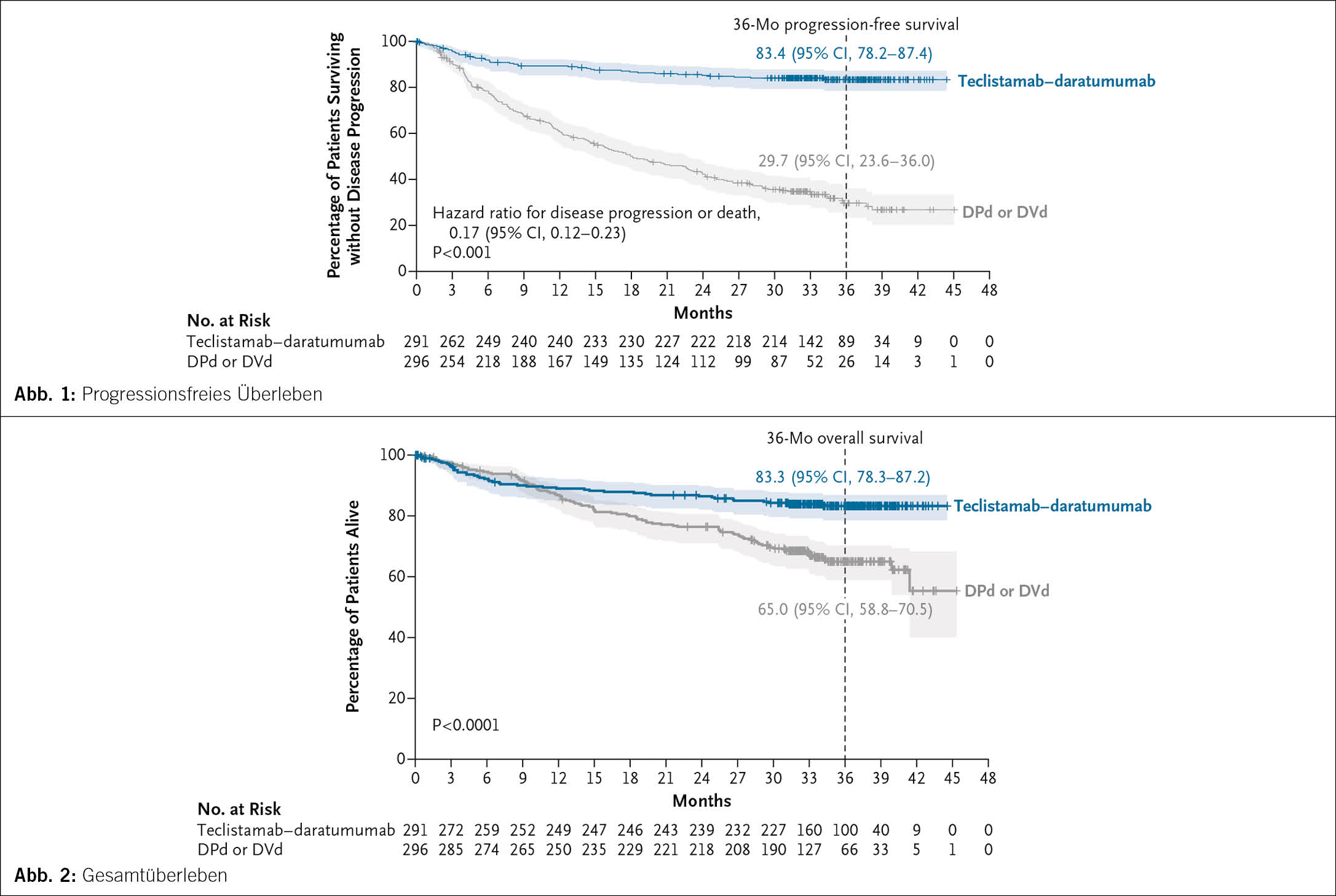
Teclistamab ist ein bispezifischer Antikörper (T-Zell-Stimulator); Daratumumab ein CD38 spezifischer Antikörper. In dieser Studie wurden Patienten mit refraktärem/rezidivierendem Plasmazellmyelom eingeschlossen, die meisten in der zweiten Therapielinie. Sie erhielten die Kombination aus Teclistamab und Daratumumab oder Daratumumab in Kombination mit Pomalidomid und Dexamethason bzw. Bortezomib und Dexamethason, also eine Standard-3er-Kombination. Die Patienten durften nicht Daratumumab-refraktär sein. 587 Patienten wurden randomisiert. 291 bzw. 296 Patienten wurden in die Gruppen Teclistamab-Daratumumab bzw. DPD oder DBD randomisiert. Die Kombination des BCMA-gerichteten bispezifischen Antikörpers war im progressionsfreien Überleben (Abb. 1) hochsignifikant überlegen: Nach 34.5 Monaten betrug die Hazard Ratio 0.17 (95 % CI 0.12–0.23; p < 0.001), das 3-Jahres-PFS betrug 83.4 % gegenüber 29.7 %. Die Rate an kompletter Remission war unter dem experimentellen Arm mit 81.8 % vs. 32.1 % höher und die Rate an MRD-Negativität entsprechend mit 58.4 % vs. 17.1 %. Alle Untergruppen profitierten.

Nebenwirkungen traten bei 70.7 % der Patienten auf, davon tödliche bei 7.1 %, wobei fast alle Todesfälle auf infektiöse Nebenwirkungen zurückzuführen waren. Das Gesamtüber­leben war ebenfalls besser unter Teclistamab-Daratumumab (Abb. 2).

Quelle
Costa LJ, Bahlis NJ, Perrot et al. MajesTEC-3 Trial Investigators. N Engl J Med. 2025 Dec 9. doi: 10.1056/NEJMoa2514663. Online ahead of print.PMID: 41363801

Dual-Targeting des extramedullären Myeloms mit Talquetamab und Teclistamab

Unter den Patienten mit Plasmazellmyelom hat die extramedu­lläre Krankheit eine besonders schlechte Prognose. Diese meist spät im Krankheitsverlauf auftretenden Krankheiten sind besonders häufig therapierefraktär. Verschiedene Organsysteme können betroffen sein, ausserhalb des Skelettes und des Knochenmarks. Bispezifische Antikörper haben bei Patienten mit Plasmazellmyelom neue Therapieoptionen eröffnet und zur Zeit gibt es Teclistamab, einen BCMA (B-cell maturation antigen) spezifischen, sowie Talquetamab, einen GPRC5D (anti-G protein-coupled receptor family C group 5 member D) spezifischen bispezifischen Antikörper.

In dieser Studie wurde Talquetamab mit Teclistamab kombiniert. Besonders hervorzuheben ist die Tatsache, dass es sich um Patienten mit «wahrer» extramedullärer Krankheit handelt, d.h. ein mit dem Knochen per continuitatem gewachsener Herd gilt nicht als extramedullär. Zum Beispiel ist ein aus einer Rippe in die Pleura einwachsender Herd in dieser Definition nicht extramedullär.

In diese Phase-II-Studie wurden Patienten eingeschlossen, die nach einer Vorbehandlung mit CD38-Antikörpern sowie Imiden und Proteasom-Inhibitoren (triple class exposed) eine rezidivierte/refraktäre Krankheit hatten.

Insgesamt wurden 90 Patienten mit beiden bispezifischen Antikörpern behandelt. Das mediane Follow-up betrug 12.6 Monate. Ein Ansprechen wurde bei 79 % (95 % CI, 69–87 %) beobachtet. 64 % (95 % CI, 48–76 %) hatten ein Ansprechen von > 12 Monaten Dauer. Das Gesamtüberleben betrug 74 % (95 % CI, 63–83). Zu den Nebenwirkungen zählten Beschwerden des Mundes mit Geschmacksstörungen und Trockenheit (87 % der Patienten), CRS (Cytokine Release Syndrome) (78 %) und Hautneben­wirkungen (69 %). Grad-3/4-Nebenwirkungen, am häufigsten hämatologisch, wurden bei 76 % der Patienten beobachtet. Von den zehn verstorbenen Patienten war bei fünf eine Infektion die Ursache. Die Autoren schliessen, dass das Ansprechen bei therapierefraktärer extramedullärer Krankheit hoch ist, die Verträglichkeit jedoch problematisch ist. Insbesondere die Infektprophylaxe ist zu verbessern (das Gleiche gilt für die nachfolgend besprochene Studie).

Quelle
Shaji Kumar, María-Victoria Mateos, Jing Christine Ye, et al. Dual Targeting of Extramedullary Myeloma with Talquetamab and Teclistamab. N Engl J Med 2026;394:51-61. DOI: 10.1056/NEJMoa2514752

CD19-CAR-T-Zelltherapie bei autoimmuner hämolytischer Anämie

Die autoimmunhämolytische Anämie (AIHA) ist eine typische, meist gutartig verlaufende Autoimmunerkrankung, welche aber in seltenen Fällen schwer und therapierefraktär verlaufen kann. Patienten mit mehr als drei Therapielinien gelten als multi-refraktär. CD19-spezifische autologe CAR-T-Zellen werden derzeit bei verschiedenen Autoimmunerkrankungen getestet. Darüber wurde in früheren Ausgaben berichtet.

In diese Phase-I-Studie wurden 11 Patienten eingeschlossen (6 in die Phase I, 5 als Compassionate Use). Sie erhielten autologe, CD19-spezifische CAR-T-Zellen. Die lymphodepletierende Therapie erfolgte mit Fludarabine und Cyclophosphamid. Das mediane Follow-up beträgt 12 Monate. Alle Patienten sprachen auf die Therapie an, die Hämolyse sistierte und das Hämoglobin wurde korrigiert. Die mediane behandlungsfreie Remissionsdauer betrug 11.5 Monate. CRS (Cytokine Release Syndrome) Grad I–II wurde bei neun Patienten beobachtet, Neurotoxizität Grad I bei einem Patienten.

Quelle
CD19 CAR T-Cell Therapy for Autoimmune Hemolytic Anemia Ruonan Li, Hong Pan, Lele Zhang et al. N Engl J Med 2026;394:253-267

Prof. Dr. med. Jakob Passweg

Klinik für Hämatologie
Hämatologische Diagnostik Labormedizin
Universitätsspital Basel und Blutspendezentrum beider Basel SRK
Petersgraben 4
4031 Basel

jakob.passweg@usb.ch

Agonistes du récepteur du GLP-1 et santé cardiométabolique

Les maladies cardiovasculaires, rénales et métaboliques coexistent souvent et représentent une charge de morbidité considérable à l’échelle mondiale. Le diabète de type 2, l’obésité et les maladies rénales chroniques sont étroitement liés et augmentent le risque d’infarctus du myocarde, d’accident vasculaire cérébral, d’insuffisance cardiaque et de mortalité. De grandes études cliniques («outcome trials») ont montré que les agonistes des récepteurs du GLP-1 et les inhibiteurs du SGLT2 offrent des bénéfices significatifs sur les critères d’évaluation («endpoints») cardiovasculaires et rénaux. Leurs effets protecteurs reposent sur des mécanismes d’action complémentaires qui vont audelà de la simple réduction de la glycémie. Utilisés en association, et complétés par la finérénone, ils ouvrent la voie à une approche thérapeutique holistique qui peut améliorer durablement le pronostic des patients atteints de diabète de type 2 avec des comorbidités cardiométaboliques. Ceci marque un changement de paradigme dans la prévention et le traitement.

Cardiovascular, renal, and metabolic diseases often coexist and account for a major global health burden. Type 2 diabetes, obesity, and chronic kidney disease are closely interrelated and increase the risk of myocardial infarction, stroke, heart failure, and mortality. Large outcome trials have demonstrated that GLP-1 receptor agonists and SGLT2 inhibitors provide significant cardiovascular and renal benefits. These protective effects result from complementary mechanisms that extend beyond glycemic control. In combination with finerenone, they enable a comprehensive treatment strategy that improves outcomes in patients with type 2 diabetes and cardiometabolic comorbidities, representing a paradigm shift in prevention and therapy.
Keywords: GLP-1 Receptor Agonists, Cardiometabolic Health, Type 2 Diabetes, Heart Failure

Introduction

Les maladies cardiovasculaires, rénales et métaboliques comptent parmi les pathologies chroniques les plus fréquentes dans le monde. Elles surviennent rarement de manière isolée, mais sont étroitement liées les unes aux autres. On estime qu’ environ 850 millions de personnes souffrent d’une maladie rénale chronique (MRC), ce qui correspond à une prévalence de plus de 11 %. La MRC étant souvent asymptomatique à ses débuts, elle passe souvent inaperçue. Environ 523 millions de personnes dans le monde sont atteintes d’une maladie coronarienne (MC), plus de 60 millions souffrent d’insuffisance cardiaque et environ la moitié de ces patient/es décèdent dans les cinq ans suivant le diagnostic. Le diabète sucré de type 2 (DT2) touche désormais plus de 530 millions de personnes et sa prévalence continue d’augmenter.

Comorbidités et facteurs de risque

Les maladies cardiométaboliques chroniques partagent des facteurs de risque pertinents tels que l’hypertension artérielle, la dyslipidémie, l’hyperglycémie, l’obésité abdominale et l’inflammation chronique. Si celles-ci ne sont pas traitées de manière adéquate, elles peuvent entraîner des complications graves telles qu’un infarctus du myocarde, un accident vasculaire cérébral, une insuffisance cardiaque avec fraction d’éjection préservée (HFpEF), une stéatohépatite associée à un dysfonctionnement métabolique (MASH), une artériopathie oblitérante des membres inférieurs (AOMI) ou une progression de la MRC.

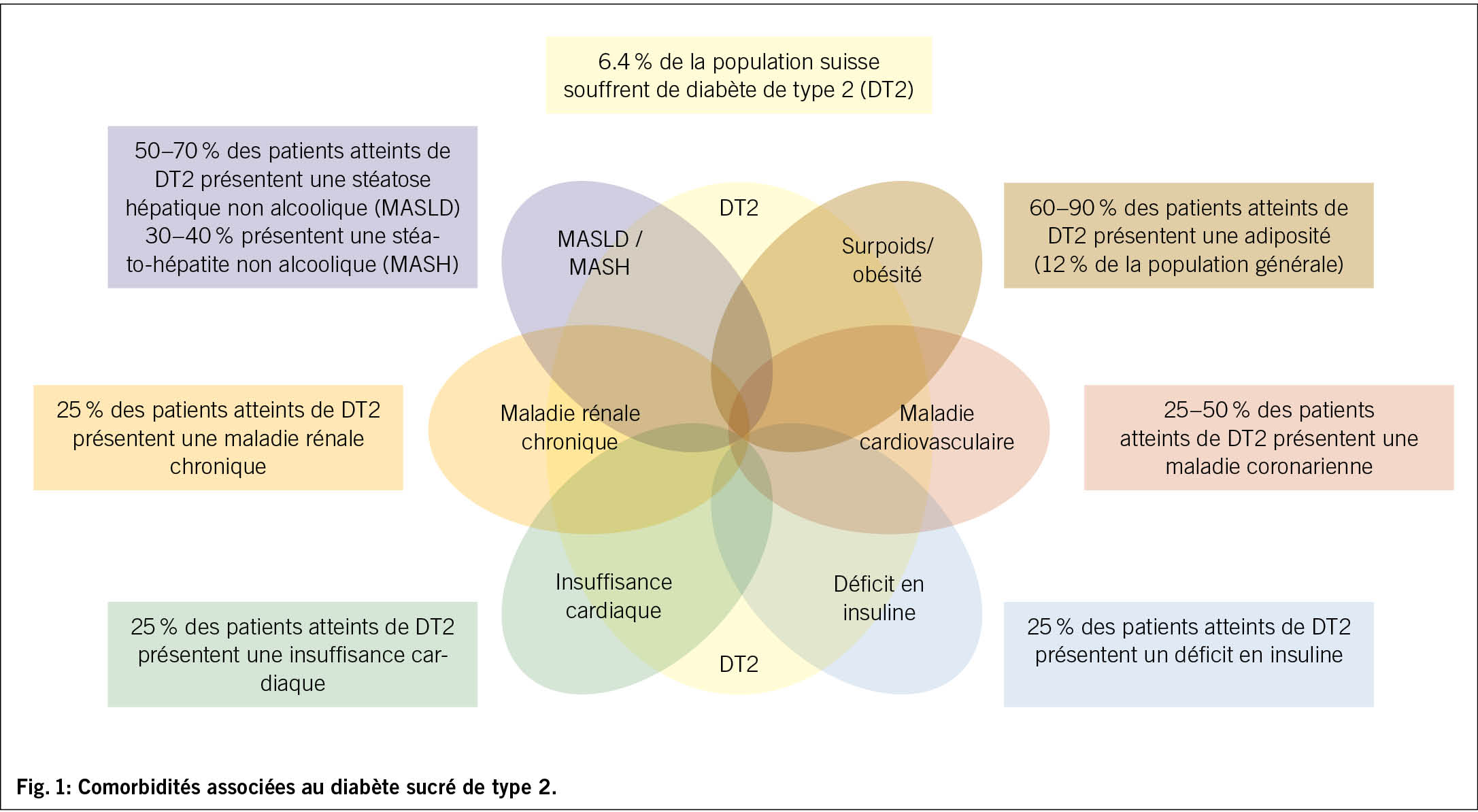
La charge des comorbidités est particulièrement élevée chez les personnes atteintes de DT2. En Suisse, 6.4 % de la population est touchée, dont 60 à 90 % souffrent d’obésité, alors que ce n’est qu’environ 12 % dans la population générale. Environ un quart des patient/es atteints de diabète de type 2 présentent une maladie cardiovasculaire, et autant souffrent d’un déficit en insuline. De 50 et 70 % développent une stéatose hépatique associée à un dysfonctionnement métabolique (MASLD),et 30–40 % une MASH, et environ 25 % souffrent d’insuffisance cardiaque. L’obésité sans diabète s’accompagne également d’une charge de morbidité élevée. Plus de 1.1 milliards de personnes sont touchées dans le monde, dont jusqu’à 25 % développent en plus un DT2, près de la moitié une apnée du sommeil, plus de la moitié une hypertension et plus des deux tiers une dyslipidémie (Fig. 1).

Incrétines et mécanismes d’action

La découverte des hormones incrétines GIP (glucose-dependent insulinotropic polypeptide) dans les années 1970 et GLP-1 (glucagon-like peptide 1) dans les années 1980 a ouvert de nouvelles perspectives thérapeutiques. Le GLP-1 est libéré après l’ingestion d’aliments par les cellules L dans l’iléon distal, tandis que le GIP est sécrété par les cellules K dans le duodénum. Les agonistes des récepteurs du GLP-1 (GLP-1 RA) ont de nombreux effets directs et indirects. Ils améliorent la fonction endothéliale, augmentent la biodisponibilité de l’oxyde nitrique, inhibent les molécules d’adhésion telles que l’ICAM-1 et la VCAM-1 ainsi que la prolifération des cellules musculaires lisses, et réduisent les dépôts lipidiques et l’inflammation vasculaire. Indirectement, ils contribuent à la réduction de la pression artérielle, du poids corporel et de l’HbA1c.

Études avec des «endpoints» cardiovasculaires

Depuis 2008, la FDA américaine impose des études avec des critères d’évaluation (endpoints) cardiovasculaires pour les nouveaux antidiabétiques afin de prouver leur innocuité au-delà du contrôle glycémique. «Le MACE à 3 points» est un critère d’évaluation standard. Il comprend l’infarctus du myocarde non mortel, l’accident vasculaire cérébral non mortel et la mort cardiovasculaire.

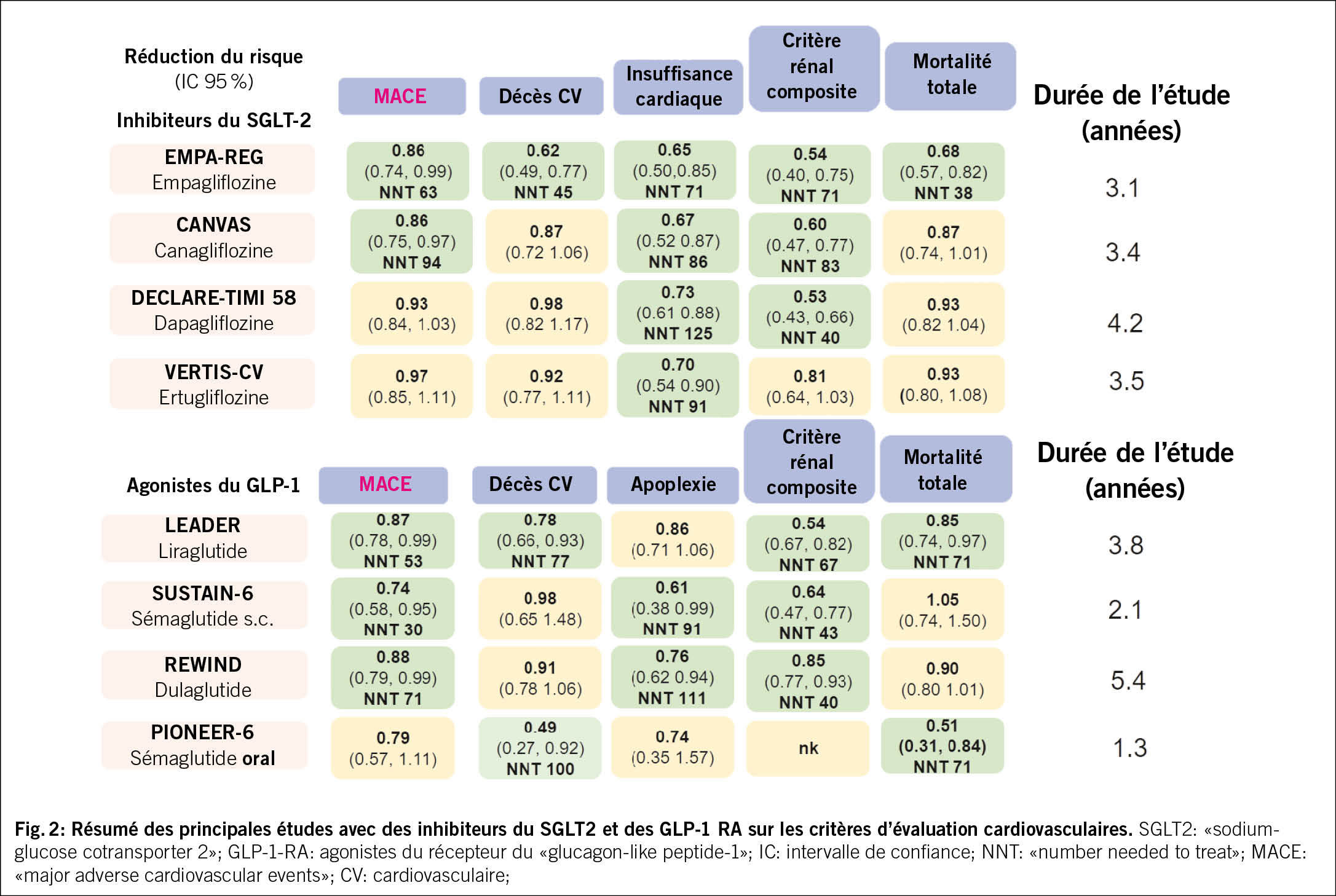
La première étude ayant démontré un bénéfice clair était EMPA-REG OUTCOME: l’empagliflozine a réduit le risque de MACE à 3 points de 14 %, la mortalité cardiovasculaire de 38 %, les hospitalisations pour insuffisance cardiaque de 35 % et la mortalité globale de 32 %. L’étude LEADER a fourni la première preuve d’efficacité d’un agoniste du récepteur du GLP-1. Le liraglutide a réduit la mortalité cardiovasculaire de 22 % et la mortalité globale de 15 %. D’autres études, telles que SUSTAIN-6 (semaglutide) et REWIND (dulaglutide), ont confirmé ces résultats (Fig. 2). Des études plus récentes ont élargi le spectre. L’étude SELECT a montré une réduction relative de 20 % du risque du MACE à 3 points sous semaglutide chez les patients en surpoids atteints d’une maladie cardiovasculaire, mais sans diabète. L’étude SOUL avec le semaglutide par voie orale a montré une réduction significative de 14 % du MACE chez plus de 9600 patients atteints de diabète de type 2 et de maladies cardiovasculaires ou de MRC. L’essai FLOW a démontré pour la première fois un avantage pour un agoniste des récepteurs du GLP-1 chez les patients atteints de diabète de type 2 et d’insuffisance rénale chronique, avec une réduction de 27 % des événements d’insuffisance cardiaque et de mortalité cardiovasculaire.

Approches thérapeutiques synergiques

Les mécanismes d’action différents des agonistes des récepteurs du GLP-1 et des inhibiteurs du SGLT2 expliquent leurs effets complémentaires. Alors que les GLP-1 RA ont principalement des effets anti-inflammatoires, antiathérogènes et métaboliques, les inhibiteurs du SGLT2 ont des effets hémodynamiques, anti-fibrotiques et antiarythmiques. De plus, ils réduisent la précharge et la postcharge, diminuent le stress oxydatif et améliorent l’hémodynamique rénale. L’interaction de ces mécanismes justifie la thérapie combinée, qui est de plus en plus considérée comme le standard dans la pratique clinique. L’ajout de la finérénone, un antagoniste non stéroïdien des récepteurs minéralocorticoïdes, renforce encore les effets protecteurs cardiovasculaires et rénaux. La finérénone s’est révélée efficace dans des essais cliniques chez des patients atteints de diabète de type 2 et d’insuffisance rénale chronique. Il a été démontré qu’elle réduit significativement le risque de survenue d’événements combinés cardiovasculaires et rénaux, de 14 % avec un nombre de patients à traiter (NNT) de 46 et de 23 % avec un NNT de 60, après trois ans. Chez les patients atteints d’insuffisance cardiaque avec HFpEF, la finérénone a également réduit de 16 % le risque de péjoration de l’insuffisance cardiaque ou de décès.

Les résultats de la thérapie combinée sont particulièrement prometteurs. Des analyses approfondies d’études (notamment CANVAS, CREDENCE, FIDELIO-DKD, FIGARO-DKD) ont montré que la triple combinaison avec des GLP-1 RA, inhibiteurs du SGLT2 et finérénone offre le plus grand potentiel pour obtenir des améliorations significatives en termes d’événements cardio-vasculaires et rénaux, d’insuffisance cardiaque et de survie globale chez les patients atteints de DT2 avec albuminurie modérément élevée. La double combinaison s’est également révélée supérieure aux substances individuelles. Dans ce contexte, les données actuelles plaident clairement en faveur de l’utilisation de la finérénone en association avec des agonistes du récepteur du GLP-1 et des inhibiteurs du SGLT2 afin d’optimiser la protection cardio-rénale chez cette population à haut risque.

Objectifs thérapeutiques et critères cliniques

Le choix du traitement antidiabétique dépend à la fois des préférences du patient et des objectifs médicaux. Alors que les patients préfèrent généralement un traitement sans hypoglycémies, avec une perte de poids et une administration aussi simple que possible, les médecins mettent le focus davantage sur la réduction de la mortalité, la prévention des complications micro- et macrovasculaires, ainsi que sur la prise en compte de l’âge, de la durée du diabète, de la fonction rénale, des comorbidités, des effets secondaires et des coûts.

Les recommandations suisses actuelles prévoient un traitement combiné initial associant la metformine et un inhibiteur du SGLT2 ou un agoniste des récepteurs du GLP-1. En cas de résultat insuffisant, une triple combinaison doit être mise en place. Les sulfonylurées ne sont plus considérées comme un traitement standard en raison du risque élevé d’hypoglycémie et de prise de poids. Ce n’est que lorsque ces stratégies s’avèrent insuffisantes qu’un traitement à l’insuline devient nécessaire.

Il convient également de tenir compte d’aspects pratiques. En cas de maladies aiguës telles que vomissements, diarrhées, infections graves, hospitalisations ou opérations, il est recommandé d’arrêter temporairement la metformine et les inhibiteurs du SGLT2 et d’utiliser de l’insuline selon besoin afin d’éviter des risques tels que l’acidocétose ou l’acidose lactique. Le traitement combiné doit être choisi avec soin: alors que l’utilisation simultanée d’agonistes des récepteurs du GLP-1 et d’inhibiteurs de la DPP-4 n’est pas très judicieuse en raison de leur mécanisme d’action identique, la combinaison d’insuline et de sulfonylurées doit être strictement évitée, car elle augmente considérablement le risque d’hypoglycémie.

Les valeurs cibles individuelles d’HbA1c constituent un autre aspect important. Chez les patient/es jeunes sans risque d’hypoglycémie, l’objectif est une valeur cible inférieure à 6.5 %, chez les patients d’âge moyen une valeur entre 6.5 et 7.0 %, et chez les patients de plus de 80 ans une valeur entre 7.5 et 8.0 %. En cas de traitements présentant un risque d’hypoglycémie, une valeur cible < 8.0 % est considérée comme suffisante. À noter que déjà à partir d’un taux d’HbA1c de 5.5 %, le risque de maladie coronarienne et d’accident vasculaire cérébral augmente considérablement. Chaque point de pourcentage supplémentaire augmente le risque de maladie coronarienne de 50 % et celui d’accident vasculaire cérébral de 55 %. C’est pourquoi l’HbA1c doit être maintenue aussi proche que possible de la valeur normale à l’aide de médicaments sûrs.

La physiopathologie et la perspective des patient/es

De nouvelles découvertes sur la pathogenèse du diabète de type 2 soulignent le rôle de la répartition des graisses et des facteurs génétiques. Même de faibles quantités de graisse hépatique peuvent être pertinentes sur le plan physiopathologique. Des valeurs supérieures à 5 % favorisent la progression vers la fibrose et la cirrhose. La capacité de stockage de graisse sous-cutanée est déterminée par plus de 50 loci génétiques. Si des dépôts ectopiques de graisse se produisent dans le foie ou le pancréas, le diabète ne se développe que chez les personnes génétiquement prédisposées. Le fait que l’obésité ne conduit pas nécessairement au diabète est illustré par le constat que 73 % des personnes ayant un IMC supérieur à 40 kg/m² ne développent pas de diabète. Dans le même temps, jusqu’à 90 % des patient/es nouvellement diagnostiqués avec un DT2 peuvent obtenir une rémission grâce à une perte de poids (étude DiRECT).

La perspective des patient/es et des considérations économiques sont également pertinents. Beaucoup préfèrent les traitements sans hypoglycémie, qui permettent une perte de poids et sont faciles à utiliser. Les agonistes du récepteur du GLP-1 répondent largement à ces critères, en particulier sous forme d’applications hebdomadaires. De plus, ils réduisent l’appétit, ce qui entraîne souvent une diminution des dépenses alimentaires. Ces économies peuvent compenser au moins en partie les coûts du traitement et faciliter ainsi la participation financière individuelle à long terme.

Nouveaux développements

Des études récentes ont mis en évidence le potentiel des GLP-1 RA qui vont au-delà des indications classiques. Dans l’essai ESSENCE, le semaglutide a amélioré l’histologie hépatique chez les patients atteints de MASH. Le tirzepatide, un agoniste double GLP-1/GIP, ainsi que le retatrutide, un agoniste triple, ont montré des effets significatifs sur la perte de poids, la graisse hépatique et des paramètres métaboliques. Ces substances rapprochent la perspective d’offrir une alternative médicamenteuse à la chirurgie bariatrique. De plus, des études indiquent que les GLP-1 RA peuvent réduire le risque de démence de plus de 50 %.

Copyright
Aerzteverlag medinfo AG

Cet article est une traduction de «der informierte arzt – die informierte ärztin» 10_2025.

Pr Roger Lehmann

Clinique d’endocrinologie, de diabétologie et nutrition clinique
Hôpital universitaire de Zurich
Rämistrasse 100
8091 Zurich

Roger.Lehmann@usz.ch

L’auteur n’a déclaré aucun conflit d’intérêts en rapport avec cet article.

  • Les agonistes des récepteurs du GLP-1 se sont imposés comme des substances clés dans la prise en charge des maladies cardiométaboliques.
  • Ils réduisent le poids, la pression artérielle et l’HbA1c, améliorent la fonction endothéliale et réduisent le risque d’événements cardiovasculaires et rénaux, ainsi que, potentiellement, le risque de démence.
  • Leur association avec des inhibiteurs du SGLT2 et la finérénone renforce les effets protecteurs et permet une approche holistique pour les patients atteints de diabète de type 2, d’obésité, de MRC et de maladies cardiovasculaires.
  • Dans l’ensemble, cette stratégie marque un changement de paradigme dans la prévention et le traitement des maladies cardiométaboliques chroniques.

Sur demande auprès de l’auteur

Neues und Altes zum Älterwerden der Niere

Zweimal im Jahr finden die Kurse der Europäischen Akademie für Altersmedizin (EAMA.eu) statt.

EAMA, in der Schweiz gegründet, ist die Kaderschmiede für Geriatrie in Europa. Viele Teilnehmerinnen und Teilnehmer des zweijährigen Curriculums bewerben sich erfolgreich auf Chef- oder Kaderpositionen, werden auf Lehrstühle berufen oder erhalten eine Professur. Als Mitorganisator der EAMA-Kurse bin ich jeweils überrascht von der hohen Fachkompetenz der aus allen Ländern stammenden Teilnehmerinnen und Teilnehmer, deren Engagement und deren Enthusiasmus für das nach wie vor etwas stiefmütterlich behandelte Fach Geriatrie. Im Rahmen der Kurse werden regelmässig state-of-the-art Vorlesungen gehalten, die ein wunderbares Destillat zu den neusten Erkenntnissen der geriatrischen Grundlagenforschung oder Medizin bieten.

Dr. Santiago Castejón Hernández aus Spanien fasste die altersbedingten Veränderungen der Niere zusammen, die bezüglich renal ausgeschiedener Medikamente und der Definition der «chronischen Niereninsuffizienz» für alte Personen von Bedeutung sind. Hierbei handelt es sich um physiologische Veränderungen in Struktur und Funktion ohne Vorliegen einer Nierenpathologie. Während wir als junge Menschen rund 990 000 Nephronen zur Verfügung haben, halbiert sich die Zahl bis zum 75. Lebensjahr. Hinzu kommt die ebenfalls physiologische (altersbedingte) Nephrosklerose mit arteriosklerotischen Veränderungen in den Arterien und Arteriolen, einer Vernarbung der Filtrationseinheiten, der Atrophie der Tubuli sowie einer zunehmenden interstitiellen Fibrose. Der Prozentsatz der Veränderungen der Mikrostrukturen steigt von drei auf eindrückliche 73 Prozent oder anders ausgedrückt: die Zahl der sklerotischen Glomeruli versechsfacht sich. Makroskopisch schrumpft die Niere (16 cm3/Dekade), lagert dafür mehr Sinusfett ein sie bekommt Zysten. Die Nierenfunktion nimmt durch reine Organalternung und ohne Komorbiditäten im Alter ab. Als Faustregel können Sie sich eine Reduktion von 1 ml/min/Jahr merken. Das aber wiederum bedeutet, dass die glomeruläre Filtrationsrate (wie auch immer berechnet) nicht zwingend 1 : 1 als Kriterium für die Diagnostik der Chronischen Nierenfunktionsstörung als klinische Diagnose herangezogen werden kann. Nimmt man den derzeitig gültigen Schwellenwert von < 60 ml/min/1.73m2 als Cut-off wären alle Personen über 75 Jahre niereninsuffizient, auch die gesunden.

Als Alternativen setzen sich langsam andere Konzepte durch: anstatt des Begriffs Chronische Nierenerkrankungen wird neuerdings die Alternative «Nierenalterung» diskutiert. Stadium 3A heisst nach dieser Nomenklatur Nierenalterung 68–77 Jahre, Stadium 3B Nierenalterung 77–86 Jahre. Ein solches Konzept muss nun natürlich in grösseren Kohorten validiert werden. Zudem sucht man intensiv nach besseren Biomarkern unabhängig von der Muskelmasse, die ja ebenfalls mit zunehmendem Alter abnimmt (Sarkopenie). Im klinischen Alltag oder der Praxis kann man sich aber bereits jetzt schon mit folgenden Schwellenwerten weiterhelfen:
Im Alter < vierzig Jahre ist eine GFR < 75 sicher als kritisch anzusehen, bei Personen über 65 gilt die GFR < 45 als kritisch. Aus geriatrischer Sicht sollten die Retentionsparameter grundsätzlich in der Gesamtschau der Patientensituation interpretiert werden. Zu den bestehenden Ergebnissen der Laboruntersuchungen gehört zwingend der funktionelle Status beispielsweise anhand einer Abschätzung der Gebrechlichkeit und der soziokulturelle Kontext der betroffenen Person. Dann gewinnt ein Laborbefund im Kontext aus Funktion und vielleicht sogar Lebenserwartung einen Wert. Oder wie es Sir William Osler schon gesagt hat: «The good doctor treats the disease, the great doctor treats the person who has the disease.»

Ich danke Dr. Castejón Hernández für die Zustellung seiner Präsentation.

PD Dr. med. Thomas Münzer

Geriatrische Klinik St. Gallen AG
Rorschacher Strasse 94
9000 St. Gallen

thomas.muenzer@geriatrie-sg.ch

Hommos MS, Glassock RJ, Rule AD. Structural and Functional Changes in Human Kidneys with Healthy Aging. Journal of the American Society of Nephrology [Internet]. 2017 Oct 1;28(10):2838–44. Available from: https://journals.lww.com/00001751-201710000-00007

Tan H, Xu J, Liu Y. Ageing, cellular senescence and chronic kidney disease: experimental evidence. Curr Opin Nephrol Hypertens [Internet]. 2022 May 1;31(3):235–43. Available from: https://journals.lww.com/10.1097/MNH.0000000000000782

Stevens RJ, Evans J, Oke J, Smart B, Hobbs FDR, Holloway E, et al. Kidney age, not kidney disease. Can Med Assoc J [Internet]. 2018 Apr 3;190(13):E389–93. Available from: http://www.cmaj.ca/lookup/doi/10.1503/cmaj.170674

Piras D, Masala M, Delitala A, Urru SAM, Curreli N, Balaci L, et al. Kidney size in relation to ageing, gender, renal function, birthweight and chronic kidney disease risk factors in a general population. Nephrology Dialysis Transplantation [Internet]. 2020 Apr 1;35(4):640–7.
Available from: https://academic.oup.com/ndt/article/35/4/640/5086498

Journal Watch von unseren Experten

Antibiotika statt Operation bei Appendizitis

Vor etwa zwei Jahrzehnten wurde die damalige Lehrmeinung, eine Appendizitis sei eine absolute Operationsindikation, in Frage gestellt und als Alternative eine Antibiotikatherapie erwogen. Nun liegen 10-Jahresdaten einer multizentrischen, randomisierten Studie (APPAC) in 6 finnischen Krankenhäusern von November 2009 bis Juni 2012 vor, bei der 530 Patienten mit unkomplizierter akuter Appendizitis, diagnostiziert durch Computertomografie, zufällig mit einer Appendektomie (n = 273) oder mit Antibiotika (n = 257) behandelt wurden. Die Appendektomie erfolgte offen; die Antibiotikatherapie bestand in intravenösem Ertapenem-Natrium (1 g/d) für 3 Tage, gefolgt von 7 Tagen oralem Levofloxacin (500 mg/d) und Metronidazol (1500 mg/d). Die aktuelle Analyse wertete die 10-Jahres-Rückfallrate einer Appendizitis bei den Patienten der Antibiotikagruppe aus.

Bei dieser 10-Jahres-Nachbeobachtung wurden 253 von 257 Patienten (98.4 %; Alter 33 Jahre; 102 [40.3 %] Frauen), welche Antibiotika erhalten hatten, auf einen Rückfall einer
Appendizitis untersucht. Diese Appendizitis-Rückfallrate (Appendizitis in der Histopathologie) betrug 37.8 % bei einer kumulativen Appendektomierate von 44.3 %. Insgesamt lag die 10-Jahres-kumulative Komplikationsrate in der Antibiotika­gruppe bei 8.5 % und in der Appendektomiegruppe bei 27.4 % (p < 0.001). Es wurde kein signifikanter Unterschied in der Lebensqualität zwischen der Antibiotikagruppe und der Appendektomiegruppe beobachtet (Median Health Index Wert 1.0 für beide Gruppen; p = 0.18).

Fazit
Wenn Patienten mit unkomplizierter, das heisst ohne Appendikolith, Perforation, Abszess oder Tumorverdacht, akuter Appendizitis mit einer breit wirksamen Antibiotikakombination behandelt werden, tritt in den darauffolgenden 10 Jahren in weniger als der Hälfte der Fälle ein Appendizitisrezidiv auf. Eine Operation innerhalb von 10 Jahren erfolgte in 44.3 % und eine histologische Bestätigung in 37.8 %. Die kumulative Rate an Komplikationen betrug bei den Antibiotikabehandelten 8.5 % und bei den operativ Behandelten 27.4 % und war statistisch ohne Operation signifikant niedriger. Bezüglich Lebensqualität, gemessen mit dem Europäischen QOL-5 Dimensionsfrage­bogen (EQ-5D-5L), ergaben sich keine signifikanten Unterschiede zwischen den beiden Studienarmen.

Einschränkend ist zu bemerken, dass die Studienanlage vor über 10 Jahren nicht dem heutigen Stand der Therapierichtlinien (beispielsweise die S1-Leitlinie zur Therapie der akuten Appendizitis bei Erwachsenen der Deutschen Gesellschaft für Allgemein- und Viszeralchirurgie) entspricht. Der operative Standard ist heute die laparoskopische und nicht die offene Appendektomie, bei der weniger Komplikationen auftreten als nach offener. Bei der Antibiotikatherapie sollten keine Reserveantibiotika (Carbapeneme) verwendet werden; eine derzeit laufende RCT APPAC IV untersucht orales Moxifloxacin doppelblind gegen Placebo.

Eine spezielle Erwägung betrifft die in den vergangenen Jahrzehnten steigende Inzidenz maligner Appendixtumoren und das mit zunehmendem Alter wachsende Risiko, dass sich hinter einer akuten Appendizitis ein Malignom verbirgt. In der vorliegenden Studie wurde bei 71 % der Patienten, die am Ende des 10-jährigen Beobachtungszeitraums noch eine intakte Appendix hatten, eine Magnetresonanzuntersuchung durchgeführt und bei 2 dieser 102 Patienten Hinweise auf einen Appendixtumor gefunden. Allerdings ist die Sensitivität der MR in der Detektion von Tumoren in symptomlosen Appendices ungewiss. Nach Appendektomie und histologischer Untersuchung stellten sich diese beiden als niedriggradige muzinöse Neoplasie der Appendix (Low-Grade Appendiceal Mucinous Neoplasm, LAMN) heraus, die keiner weiteren Behandlung bedurften. Die Gesamtprävalenz von Appendixtumoren nach 10 Jahren lag bei 1.2 % und zeigte keinen statistisch signifikanten Unterschied zwischen den Behandlungsgruppen.

Die Entscheidung für oder gegen eine Operation bei akuter Appendizitis erfordert eine sorgfältige Abwägung anhand der individuellen Gegebenheiten, wobei die Präferenzen des Patienten, dessen Alter und Risikotoleranz eine wichtige Rolle spielen. Eine Antibiotikatherapie ist – entgegen früherer Lehrmeinung – eine valable Option.

KD Dr. med. lic. phil. Marcel Weber

Literatur
Salminen P. et al. Antibiotic Therapy for Uncomplicated Acute Appendicitis: Ten-Year Follow-Up of the APPAC Randomized Clinical Trial. JAMA 2026 Jan 21. doi: 10.1001/jama.2025.25921. https://pubmed.ncbi.nlm.nih.gov/41563747/

Bei Meniskusriss und Knieschmerzen sind Übungen zu Hause gleich wirksam wie aufwendigere Therapien

Hintergrund
Ein gutes Drittel der Personen mittleren Alters und 80 % aller Patienten mit einer Kniearthrose haben einen Meniskusriss. Es ist unklar, ob die Kniebeschwerden durch den Meniskusriss, die Arthrose oder beides verursacht werden. Die Resultate mehrerer randomisierter Studien ergaben, dass eine arthroskopische partielle Meniskektomie bezüglich Schmerzen und Funktion ein Jahr nach dem Eingriff keinen positiven Effekt hat. In den USA werden anscheinend immer noch 400 000 solcher Eingriffe durchgeführt. Gemäss Guidelines soll bei diesen Patienten als erste therapeutische Massnahme eine Physiotherapie oder Übungen unter Supervision durchgeführt werden. Es ist unklar, ob die Verbesserung der Beschwerden – Schmerzen und Funktion – ein Effekt der Übungen, der Interaktion mit den Physiotherapeut/-innen oder von beidem ist.
Diese Studie untersuchte, ob Erinnerungshilfen zur Durchführung der Übungen (zu Hause) oder eine zusätzliche Physiotherapie einen grösseren Nutzen bringen als das alleinige Üben zu Hause. Ausserdem wurde verglichen, ob eine Physiotherapie wirksamer ist als eine Scheinphysiotherapie mit einer ähnlichen therapeutischen Interaktion.

Einschlusskriterien
• 45- bis 85-Jährige mit Knieschmerzen und einem im MRI nachgewiesenen Meniskusriss im schmerzhaften Kompartiment – also entweder lateral oder medial – und
• Nachweis mindestens eines Osteophyten oder
• ein Knorpeldefekt – partiell oder komplett – in einem der Kompartimente

Studiendesign und Methode
Randomisierte Studie

Studienort
Mehrere Kliniken in den USA

Interventionen (mit kursorischer ­Beschreibung der Interventionen)
• Gruppe 1: Üben zu Hause. Patienten erhielten eine In­struktion (Stretchen von Quadrizeps, Achillessehne, Gastrocnemius; Stärkung verschiedener Muskeln)
• Gruppe 2: Üben zu Hause und Erinnerungen; zusätzlich zu der Übungsinstruktion erhielten die Teilnehmer drei Textnachrichten/Woche zur Motivationsstärkung und zweimal monatlich ein Schreiben zur Ermunterung, die Übungen regelmässig zu machen
• Gruppe 3: Üben zu Hause und Erinnerungen und Schein-physiotherapie (Scheinphysiotherapie, insgesamt 14 Sitzungen, bestand aus einer ausführlichen Knieuntersuchung, Pseudoultraschall und Einreiben mit Cremen ohne pharmakologische Wirkung)
• Gruppe 4: Üben zu Hause und Erinnerungen und Standardphysiotherapie, insgesamt 14 Sitzungen

Outcome
Primärer Outcome
• Veränderung «Knee Injury Osteoarthritis Outcome Score»(KOOS)-Schmerzscore 3 Monate nach Therapiebeginn (KOOS ist ein validierter Fragebogen für die Erfassung von Kniebeschwerden)

Sekundäre Outcomes
• Anteil Patienten ohne Therapieansprechen, d. h. keine Verbesserung im KOOS-Schmerzscore um mind. 8 Punkte (das ist der minimal klinisch relevante Unterschied)
• Bei wie vielen Patienten mit einer Verbesserung des Scores um 8 oder mehr Punkte war der Therapieeffekt nach einem Jahr anhaltend?

Resultat
• Von über 26 000 Patienten, die auf Eignung zur Teilnahme an der Studie untersucht wurden, wurden 879 Patienten randomisiert. In jeder der vier Gruppen waren etwas mehr als 200 Patienten.
• Das mittlere Alter lag bei 60 Jahren; etwas mehr als die Hälfte waren Frauen; zwei Drittel hatten ein Kellgren-Lawrence-Stadium (Breite des Gelenkspaltes) zwischen 0 und 2 (d. h. radiologisch nicht sehr fortgeschrittene Stadien).
• Zwischen den einzelnen Gruppen waren im primären wie auch bei den sekundären Outcomes keine relevanten oder signifikanten Unterschiede feststellbar.
• Der grösste Unterschied mit 2.5 Punkten im KOOS- Schmerzscore, der aber statistisch nicht signifikant war, war zwischen den Gruppen 1 (Üben zu Hause) und 4 (Üben zu Hause und Erinnerungen und Standardphysiotherapie) beobachtbar (Gruppe 4 war besser als Gruppe 1).

Kommentar
• Bei Patienten mit Meniskusriss und Knieschmerzen war eine standardisierte Physiotherapie plus schriftliche ­Erinnerungen zur Motivation von Übungen zu Hause nicht wirksamer als das Üben zu Hause ohne weitere Interventionen wie Physiotherapie und Erinnerungen.
• Ob diese Ergebnisse künftige Empfehlungen beeinflussen werden – ­alleiniges Üben zu Hause und keine Physiotherapie –, ist derzeit offen.

Prof. em. Dr. med. Johann Steurer